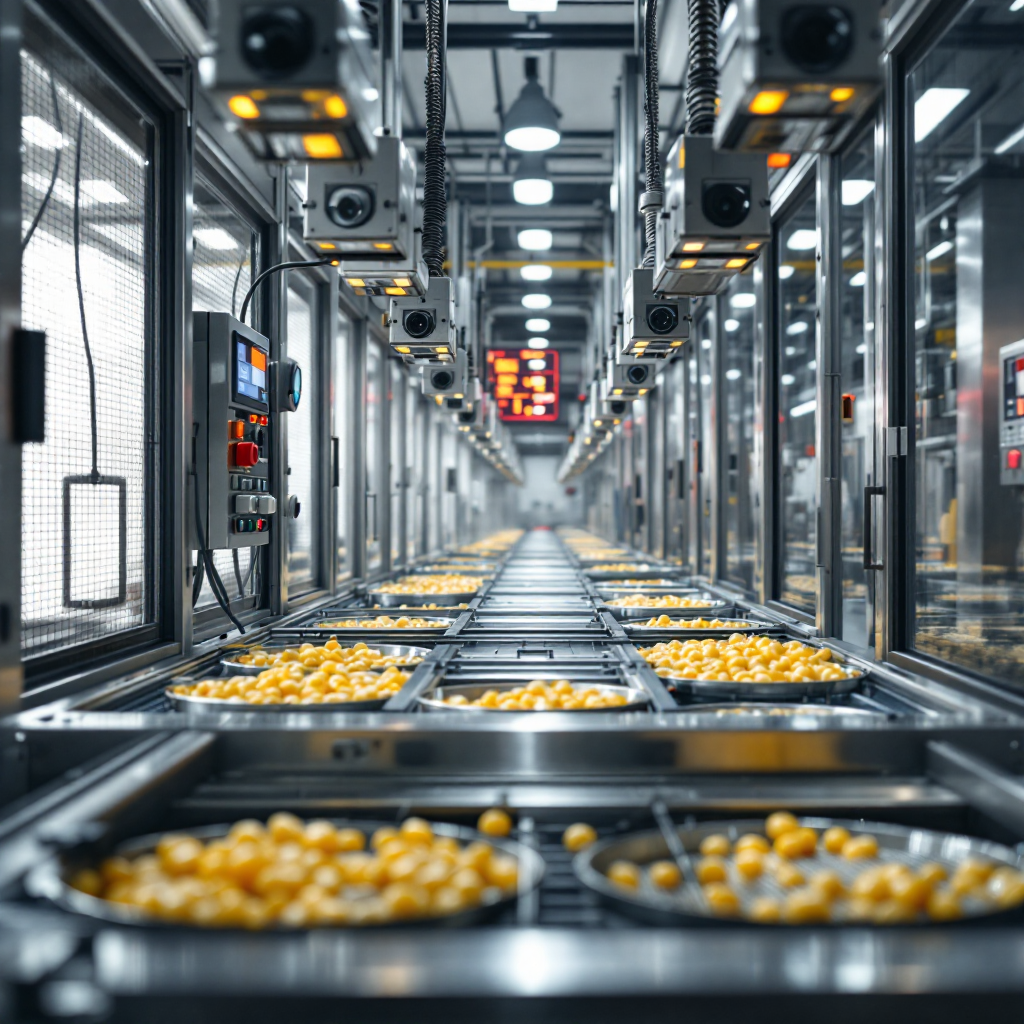
Role of Artificial Intelligence and AI System in Poultry Processing
First, define what we mean by artificial intelligence in the context of food plants. AI refers to software that learns patterns from data and then makes repeatable decisions. Next, an ai system is the combination of cameras, compute, models, and integration that turns CCTV into an operational sensor. For turkey and other poultry lines this matters. The global ai video analytics market was valued at USD 9.40 billion in 2024, which shows strong investment and interest in vision-led automation Mercado de análisis de vídeo con IA: tamaño, cuota y tendencias globales …. Also, poultry processing must run at high speed. Therefore plants need real-time monitoring to protect quality and throughput.
Then, why does a poultry processing plant need this kind of system? First, plants process many carcass units per hour. Second, manual inspection becomes inconsistent as throughput rises. Third, continuous monitoring by cameras can support traceability and create auditable logs for audits. For example, researchers emphasize that video big data requires scalable, on-site solutions to meet privacy and performance needs Una encuesta sobre el análisis de big data de vídeo. Also, a focus on worker safety and contamination control makes monitoring essential. Visionplatform.ai turns existing CCTV into an operational sensor network, so processors can deploy computer vision without ripping out systems. This method helps processors get measurable results and keep video and training data in a controlled environment. Additionally, the system can publish video events and integrate with dashboards and SCADA systems for operations, not just security.
Moreover, turkey plants differ from other food lines. They need hygiene controls at every step, and they have narrow thresholds for defects such as foreign material or damaged carcass parts. AI-powered vision systems provide consistent inspection. For operators the benefits include higher productivity, fewer missed defects, and auditable logs for regulators. Finally, discover how AI already assists meat processors with both quality and compliance in pilot projects across industrial zones in Turkey conjunto de datos de vídeo de Eskişehir. This early work points to repeatable gains at scale.
Essential System Components and AI-Powered Analytics for Poultry Farm Efficiency
First, list the system components. Cameras and lighting form the first layer. Then edge servers or GPU machines process streams. Next, ai models and machine vision routines examine each frame. Also, sensors such as weight sensors or IoT counters augment vision. A clear hardware stack allows teams to deploy on-site or in local data centers. Visionplatform.ai supports ONVIF/RTSP cameras and integrates with VMS to reuse footage for retraining. Additionally, the platform streams into structured events for dashboards and OEE systems so teams can act quickly.
Then, describe the software modules. First, a frame capture and buffering layer. Next, model inference engines run deep learning models for defect detection and process anomaly detection. Also, a rules engine aggregates video events into alarms or operational signals. Furthermore, a dashboard presents metrics like throughput, occupancy, and defect rates. These metrics give staff measurable insight into line health. For example, an ai-powered defect detection pipeline can flag foreign material, bruising, or incomplete processing in real time, and it can trigger an alert to stop the line.
Also, quantify gains where possible. Studies show that automated visual inspection can increase inspection accuracy and reduce manual rework. Pegatron improved defect analysis accuracy from 76% to nearly 95% by combining visual agents and VLMs Pegatron escala operaciones de fábrica con agentes visuales e IA. In poultry, similar improvements can reduce waste and increase productivity. For poultry farm and plant operators the result is higher throughput, fewer customer complaints, and improved traceability across the supply chain. Finally, ai tools enable predictive alerts and automated sorting, so processors can automate decision steps and reduce human error.
AI vision within minutes?
With our no-code platform you can just focus on your data, we’ll do the rest
Deployment of Automation and Analytics: Improving Food Safety in Turkey Plants
First, outline the deployment steps. Start with a site survey and camera audit. Then identify key processing line locations, such as evisceration, scalding, and packing. Next, pilot a small number of camera streams on one line for data collection. Also, keep data local while you iterate on model performance. Visionplatform.ai helps teams build models from site footage while they keep video and training data under their control. After a successful pilot, scale to additional lines and integrate with the processor’s MES and dashboard.
Also, present case data for context. A publicly released dataset of video collected in Eskişehir demonstrates that automated systems can detect safe and unsafe behaviours in production facilities conjunto de datos de vídeo para la detección de comportamientos seguros e inseguros. This work shows how analytics can reduce incidents and reinforce food safety practices. Additionally, Turkey’s regional ai market growth and broader interest in generative AI reveal a favorable climate for technology adoption Mercado de IA generativa en Turquía 2033 – IMARC Group. Together these sources support both technology and business cases for deployment.
Next, explain the food safety benefits. Continuous monitoring helps detect contamination risks early. Computer vision can spot foreign material on the line, incomplete cleaning, and incorrect PPE. Then operations can take corrective action before products leave the plant. Furthermore, automated video events and auditable video evidence help with audits, HACCP record-keeping, and traceability. For operators, these features make compliance more efficient and reduce recall risk. Finally, remember to design workflows so staff get clear, actionable alerts and not alarm fatigue.
Welfare Monitoring and Health Monitoring: AI-Powered Safeguards on the Line
First, define welfare monitoring for a poultry plant. Welfare monitoring focuses on both worker safety and animal handling practices. Next, welfare systems use vision to detect unsafe posture, slips, or prolonged exertion. Also, welfare monitoring captures occupancy and task timing so managers can spot fatigue trends and adjust staffing. Visionplatform.ai can convert CCTV into sensor data and stream events to dashboards that reveal measurable trends in staff movement and workload. Additionally, this supports sustainable poultry production by reducing injuries and improving comfort for workers.

Then, discuss health monitoring for product safety. Health monitoring includes detection of equipment issues, temperature anomalies, and signs of contamination. AI algorithms can flag anomalies in color, texture, or flow that may indicate contamination in poultry products. For example, deep learning models can reduce false positives and increase inspection accuracy in defect detection, which improves throughput and reduces waste Estudio de caso de Pegatron. Also, automated alerts let maintenance teams act before failures cascade. This keeps lines running and meat safe.
Also, cite measurable outcomes. Health monitoring combined with welfare monitoring reduces incident rates and supports audit trails. For food safety, the combination of continuous monitoring and auditable video evidence creates a repeatable record for regulators and partners. Additionally, other industry reviews note that AI enables decision-making in high-throughput environments Inteligencia artificial en el procesamiento de carne: una revisión completa. Finally, the system supports both animal welfare and staff well-being, helping processors meet customer and regulatory expectations.
AI vision within minutes?
With our no-code platform you can just focus on your data, we’ll do the rest
Scalability of Analytics and Deployment Strategies in Poultry Processing
First, address the scaling challenge. Video creates vast amounts of data. Many poultry processing lines produce continuous streams from multiple cameras. Therefore teams must plan for data from multiple lines and ways to manage storage, compute, and model retraining. Next, compare deployment options. Cloud offers centralized management and strong compute elasticity. Conversely, on-premise or edge processing reduces latency, keeps data local, and helps meet eu ai act requirements and supports gdpr and eu compliance. Visionplatform.ai emphasizes local model ownership and on-site processing to meet those needs while streaming events to dashboards.
Also, list a practical deployment strategy. Start small, measure outcomes, then scale. Use on-site inference for low-latency alerts. Then replicate working configurations to other lines. For large plants, a hybrid approach that runs core inference on edge servers and uses cloud for batch retraining can work well. Additionally, hardware examples show that enterprise deployments can include many cameras; one deployment referenced uses 900 hanwha vision cameras across a site to drive analytics and occupancy metrics. Plan bandwidth and compute around peak hours and keep thresholds conservative during roll-out.
Next, highlight privacy and operational controls. Keep video and training data inside the plant when required. This reduces regulatory risk and ensures auditable training histories for ai models. Also, define clear retention and audit policies to produce video evidence when needed. Finally, recommend best practices for scaling: modular system components, clear model governance, and integration with MES and IoT systems. These steps help processors deploy machine vision across poultry processing lines, raise throughput, and keep operations auditable and repeatable.
Emerging Trends in Poultry: Automation, AI and System Components
First, look at market forecasts. Turkey’s AI sector is expected to grow from USD 128.16 million in 2024 to USD 546.31 million by 2033, a sign that local investment in automation and AI will rise Mercado de IA generativa en Turquía 2033 – IMARC Group. Next, advanced sensors and robotics will become more common on lines. Vision systems will work with robotic sorters so processors can automate repetitive tasks. Also, process anomaly detection and predictive analytics will let teams intervene before problems affect product quality.
Additionally, VLMs and vision-language tools will help inspectors search footage faster. For instance, ai-powered search and forensic search capabilities speed investigations and root-cause analysis. Also, deep learning models will improve defect detection for issues such as woody breast and bumblefoot, where nuanced appearance matters. The national institute of food and academic partners are funding research to make these detections repeatable across sites.
Next, note operational trends. Systems will stream into structured events and publish them to MQTT for dashboards and BI. This approach means cameras become sensors that feed farm management and plant KPIs. Also, vendors will build solutions that support on-site model training so teams can reduce false positives and keep control. Visionplatform.ai streams events and lets processors own models and data, so they can deploy solutions that comply with audit and traceability needs. Finally, the combination of machine vision, iot sensors, and robotics supports sustainable poultry production and improves productivity and animal welfare, while meeting food safety and audit demands.
FAQ
How does AI video analytics improve inspection accuracy in poultry processing?
AI video analytics uses computer vision and deep learning models to examine each carcass in real time. This increases repeatability and reduces human error when compared to manual inspection.
Can I keep video and training data on-site for compliance?
Yes. Many platforms support on-site deployment so you maintain control of your footage and model training. This approach helps meet eu ai act requirements and GDPR expectations.
What hardware do I need to deploy ai video analytics?
You need quality cameras, adequate lighting, and edge or GPU servers for inference. Additional IoT sensors can enhance insights and integrate with dashboards and MES.
Will automation replace staff on the line?
Automation is designed to augment staff, not simply replace them. It reduces repetitive tasks and provides alerts so staff can focus on higher-value activities.
How quickly can I see measurable results after deployment?
Pilot projects often show measurable improvements in weeks, while full-scale benefits appear over months. Results depend on model accuracy, camera placement, and workflow integration.
What kinds of defects can these systems detect?
Systems detect surface defects, foreign material, and processing anomalies. They are also effective at spotting incomplete cuts or damaged carcass parts in real time.
How do ai models stay accurate across different lines?
Models remain accurate by retraining on site footage and applying governance to training data. Best practices include periodic audits and keeping video evidence for model validation.
Are there privacy concerns with continuous monitoring?
Privacy is a concern but can be managed with on-site processing, data minimization, and clear retention policies. These steps support auditable compliance and respect staff privacy.
Can AI help with welfare monitoring on the line?
Yes. Welfare monitoring systems detect unsafe posture, occupancy trends, and fatigue patterns. This supports both worker safety and productivity and animal welfare goals.
How do I choose between cloud and on-premise deployment?
Choose cloud for centralized management and elastic compute. Choose on-premise for low latency, local data control, and compliance with regulatory requirements. Hybrid approaches combine both for flexibility.