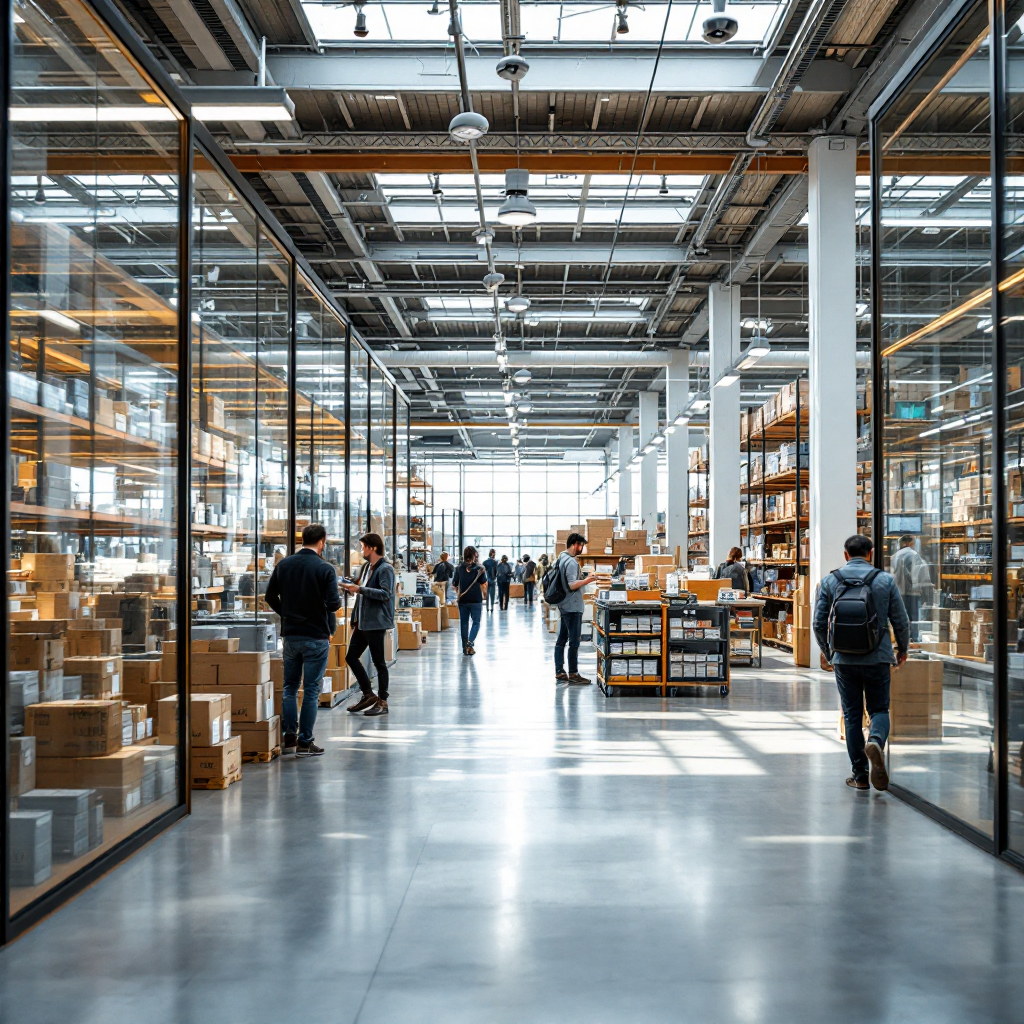
Understanding AI and people counting technology in a retail store
AI-powered people counting technology combines intelligent models, cameras, and sensors to generate actionable count data in a retail store. At a basic level, a video camera or Time-of-Flight people counting sensor captures images or depth frames. Then AI and deep-learning models process those streams to detect people, filter overlaps, and calculate entries and exits. This pipeline turns raw pixels into clean count data that retail teams can trust and use.
Systems gather data by positioning cameras at entrances, aisles, and checkout zones where they can detect people entering a space or moving between areas of the store. Many solutions run on the edge, so video never leaves the venue, and detections run in real-time on-site. Visionplatform.ai, for example, turns existing security cameras into operational sensors so stores can reuse their VMS footage and avoid expensive hardware while keeping data private and EU AI Act–aligned.
Accuracy benchmarks for modern systems now exceed 95% in many deployments. For instance, trials and success stories show AI ToF sensors and computer vision approaches achieving very high detection rates in retail environments. Research also explores person detection and re-identification in open-world settings to improve reliability when many people walk near each other in real-world stores. These advances let retailers measure the number of visitors entering and leaving, refine occupancy, and understand customer flow with confidence.
Retail teams receive more than raw counts. They get insights about entries and exits, dwell, and how traffic flows through areas of the store. These metrics help monitor customer behavior and store layouts. For physical retail this kind of data supports better staffing and faster responses to peak times. As a result, store managers can make data-driven decisions that boost operational efficiency and customer experience.
Key features of a modern people counting system and people counting solution
Compared with traditional beam counters, modern people counting systems use computer vision and AI to detect people in varied lighting and overlapping flows. A beam-based counter simply senses an object crossing an infrared beam at a door and then increments a mechanical or electronic counter. In contrast, AI cameras analyze video frames to distinguish adults from strollers, to ignore bags, and to count entries and exits accurately under crowding. This difference matters for retail chains that need reliable store traffic metrics across many locations.
Core capabilities of a people counting solution include real-time tracking, re-identification so a person can be followed across camera views without storing personal data, and anonymisation methods that protect privacy. Modern systems also provide heatmaps and people counting analytics that show areas of the store that attract attention. Video analytics convert image streams into structured events so analytics dashboards can show occupancy, dwell time, and checkout queue lengths. A people counting sensor that supports depth sensing can further improve occlusion handling in busy aisles.
Integration options matter. Leading solutions publish events to POS, CRM, and security stacks through MQTT or webhooks so teams can align staffing, promotions, and loss prevention. For retailers who use existing VMS, platforms like Visionplatform.ai can deploy on edge servers and integrate detections with Milestone XProtect or similar systems, avoiding vendor lock-in. Retailers may also integrate people counters with analytics tools to cross-reference count data with sales and marketing campaigns, enabling data-driven responses and improved conversion tracking.
Finally, a modern people counting system supports varied hardware. It works with common video camera setups and with specialized people counting sensors like ToF devices. That flexibility reduces upfront cost and lets retailers deploy where they most need traffic flow data.
AI vision within minutes?
With our no-code platform you can just focus on your data, we’ll do the rest
Leveraging video analytics and retail analytics for foot traffic insights
Video analytics transform raw video into actionable insights about footfall and customer flow. First, AI models detect people and classify movement. Then analytics pipelines aggregate events into hourly trends, visitor counts, and dwell heatmaps. These outputs help retail teams distinguish pass-by footfall from people who actually enter. Retail sensing research highlights that up to 40% of passersby do not enter a shop, so separating those groups improves conversion metrics and campaign assessment.
Key retail analytics metrics include entry versus pass-by counts, dwell time in specific product zones, and hot-spot identification. For example, heatmap analysis can reveal that a display near the front door gets high traffic but low dwell, while a middle aisle shows fewer visitors but longer dwell and higher conversion. Studies show that optimising product placement in hot spots can increase sales by up to 20% in controlled trials, which makes heatmaps and people counting analytics directly valuable to merchandising teams.
Video camera data and people counting sensors supply the raw events that feed dashboards. Retail analytics can join that data with POS timestamps to compute conversion, average transaction value, and conversion rate by hour. These dashboards help brands know when to run promotions and how to align staffing. In practice, retailers often run A/B tests of product placement and promotional messaging and then compare foot traffic and conversion outcomes. This workflow turns video analytics into measurable improvements.
For retailers concerned about privacy, anonymisation and edge processing keep video within the site while still enabling powerful insights. Visionplatform.ai supports on-prem processing so teams can operate with GDPR and EU AI Act needs in mind while still benefiting from advanced retail analytics.
People counting in retail: dashboard, operational efficiency and store performance
Dashboards translate people counting data into clear operational signals. A good dashboard shows live footfall heat maps, hourly trends, occupancy by zone, and exception alerts when queues exceed a threshold. Managers can open a dashboard and see entries and exits, monitor occupancy, and spot when checkout lanes need more staff. Dashboards also present count data alongside POS metrics so teams can correlate customer traffic with sales and conversion.
Using this information drives operational efficiency across scheduling and floor operations. For instance, staff schedules can reflect predicted peaks, which reduces idle labour and limits understaffing at crucial times. Real-time alerts help managers redeploy staff to open checkouts or to speed up replenishment. These actions reduce wait times and improve customer satisfaction, especially during high-traffic periods.
People counting for retail connects directly to store performance. When stores monitor traffic flow and dwell, they can reposition displays, adjust store layouts, and change fixture locations to maximize visibility and conversion. A data-driven approach increases conversion and can boost profitability by ensuring the right people engage with the right products at the right time. Additionally, people counting analytics helps measure the impact of marketing campaigns on customer traffic and conversion rate, and thus on ROI.
Security teams also gain value. Detections from security cameras integrate into operational dashboards so loss-prevention and operations share a single view. With integrated systems, teams reduce response times to incidents and support smoother customer experiences. If a store uses Visionplatform.ai, events can stream to MQTT and business systems so operations and security use the same people counters and consistent count data.
AI vision within minutes?
With our no-code platform you can just focus on your data, we’ll do the rest
Optimize staff allocation and profitability with retail people counting and analytics
Foot traffic forecasts allow retailers to optimize staff allocation and reduce labour costs while keeping service high. Using historical people counting data and seasonality, managers can align staff rotas to predicted peaks and troughs. For example, a store with clear lunchtime spikes can schedule more checkout staff for that window. This reduces queue times and improves conversion because fewer customers abandon purchases at checkout.
ROI comes from both reduced labour waste and higher sales. Fewer hours during slow intervals lower payroll expenses. At the same time, better-staffed peaks increase conversion and average transaction value. Retailers that use people counting analytics often report measurable uplift after they align staffing to customer traffic and dwell patterns. Running A/B tests on staffing levels provides proof: one control store runs standard rotas while a test store uses forecasted staffing; results show conversion and checkout throughput improvements where staffing matched footfall.
Beyond scheduling, count data informs merchandising and promotions. When a display shows strong dwell but low conversion, teams can experiment with alternative product placement or promotional signage. If conversion improves after reposition, the test validates the approach. These small experiments scale across a retail chain to drive consistent gains in profitability and customer experience.
Practically, deploy forecasting tools that use video analytics to predict busy windows. Then use those predictions to create staffing plans and to automate alerts when unexpected surges occur. That real-time capability helps stores react quickly, so customers experience shorter lines and faster service. The result is higher customer satisfaction and better operational efficiency across the business.
Future trends: computer vision and people counting for retail foot traffic
Advances in computer vision promise more accurate and privacy-aware people counting solutions. Edge AI, 3D sensing, and improved re-identification models will let systems handle crowding and occlusion with fewer errors. For example, depth-aware people counting sensors that combine ToF and image data will better detect people in crowded aisles and will calculate occupancy more precisely.
Looking ahead, retail foot traffic measurement will move toward omni-channel integration. Physical retail metrics will merge with online analytics to form a unified view of customer behavior across touchpoints. That integration helps brands link in-store promotions to online conversions and to attribute sales more fairly across channels. In parallel, privacy-by-design architectures will let retailers keep data on-premise, log model changes, and produce auditable event records to meet regulatory requirements.
Regulatory and ethical considerations will shape next-generation systems. Automated facial recognition trials raised public concerns about consent and misuse, so retailers must balance capabilities with transparency and opt-in approaches. Deloitte reports that consumers accept helpful AI tools when trust and privacy are preserved and when retailers act transparently. Similarly, articles exploring facial recognition stress caution and clear policies before deployment.
To remain compliant and effective, retailers should pick solutions that offer flexible model strategies, local training on site data, and the ability to stream events to operations rather than moving raw video to the cloud. Platforms like Visionplatform.ai let stores reuse existing security cameras, build models from their own footage, and deploy detections on premises. This path helps retail businesses adopt powerful people counting analytics while keeping customer trust and meeting emerging EU AI Act requirements.
FAQ
What is a people counting system and how does it work?
A people counting system uses cameras or sensors and AI models to detect and count individuals as they move through a space. It converts video or depth frames into structured count data that managers use for staffing, merchandising, and performance analysis.
How accurate are AI people counting solutions?
Modern systems often reach accuracy above 95% in controlled retail environments, especially when using depth-aware sensors or calibrated camera placements. Real-world performance varies with crowding, camera angle, and lighting, but research and success stories demonstrate high reliability in practice.
Can people counting protect customer privacy?
Yes. Many solutions anonymise detections, run inference on-premise, and avoid storing identifiable video. These approaches reduce privacy risk and help retailers comply with data protection rules while still gaining analytics.
How does video analytics improve store operations?
Video analytics turn camera streams into insights like hourly footfall, dwell time, and heatmaps. Managers use that information to reassign staff, open more checkout lanes, or reposition product displays to improve conversion.
What is the difference between pass-by footfall and entries?
Pass-by footfall counts people who pass a storefront without entering, while entries count people who cross into the retail space. Distinguishing these two improves conversion metrics and clarifies marketing impact in studies.
Can people counting integrate with POS and CRM systems?
Yes. Many people counting solutions publish events via MQTT, webhooks, or VMS integrations so you can correlate count data with sales and customer records. This integration supports data-driven decisions and better marketing campaigns.
Will people counting reduce labour costs?
It can. By aligning staff rota with predicted busy periods, stores reduce idle labour and avoid understaffing. Many retailers see improved conversion and lower labour waste after adoption.
How do heatmaps help product placement?
Heatmaps show the areas of the store that draw attention and where dwell is highest. By repositioning displays into hot spots, a retailer can increase visibility and sales; research shows upwards of a 20% lift in some cases when placement is optimised.
Can I use existing CCTV for people counting?
Often you can. Platforms that repurpose security cameras let retailers deploy people counting analytics without buying expensive hardware. Visionplatform.ai, for example, turns existing cameras into operational sensors and keeps processing local.
What should a retailer consider when choosing a people counting vendor?
Look for accuracy, privacy features, edge processing, and integration options with POS and VMS. Also consider whether the vendor supports local model training so you can tune detections to your site and avoid vendor lock-in.