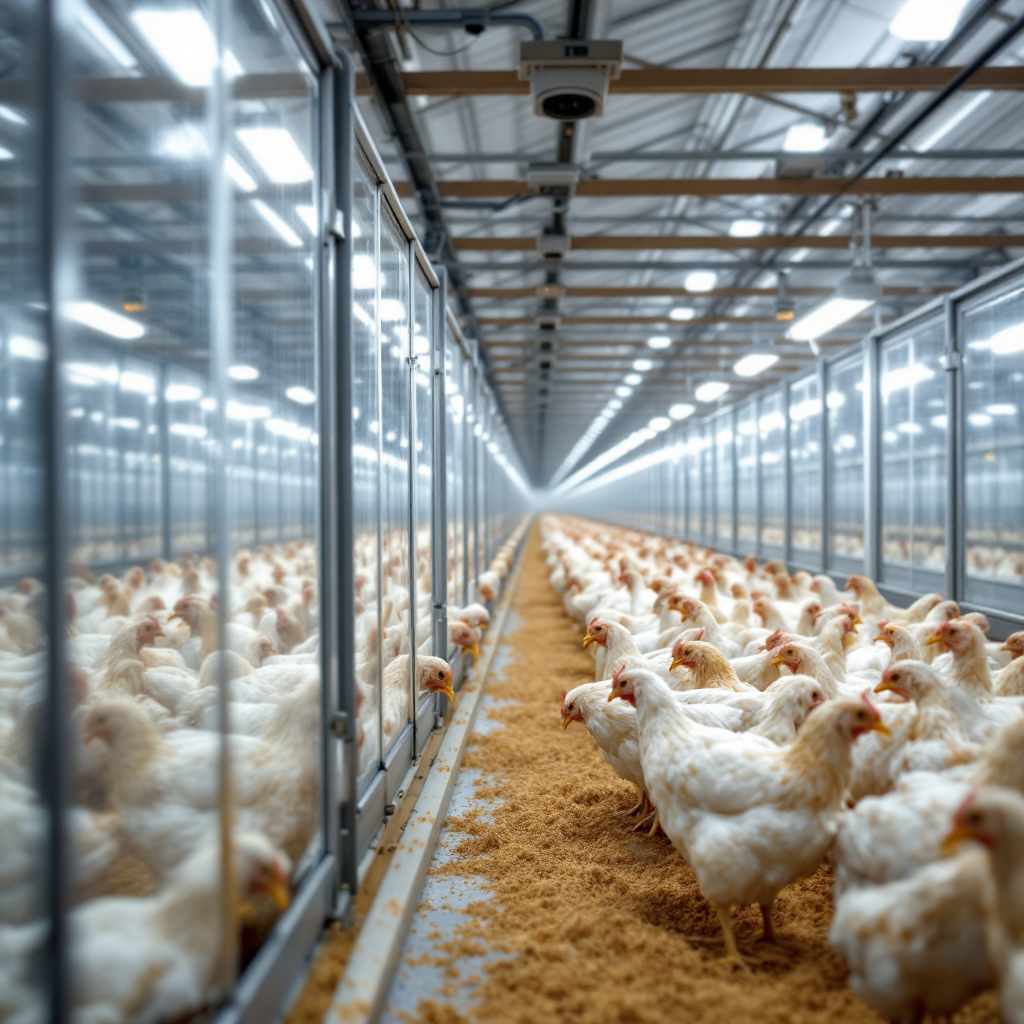
AI and poultry welfare monitoring
AI now plays a central role in monitoring poultry welfare and it changes how farms operate. Computer vision, sensors, and algorithms work together to provide real-time monitoring and early alerts. For example, camera networks and environmental sensors capture continuous data and AI models analyse that data to flag anomalies and welfare indicators so staff can act quickly. This integration supports a better view of animal welfare and helps to assess poultry welfare with objectivity and scale. The multimodal approach draws on temperature, sound, and movement analytics, and it provides a more complete welfare assessment than single-sensor systems. In one study researchers describe how multimodal systems consolidate video, audio, and sensor streams to produce continuous, actionable insights for caretakers (Safeguarding digital livestock farming).
AI can reduce disease detection time by up to 40% by spotting subtle shifts in behaviour and environment long before obvious clinical signs appear (Advancements in artificial intelligence technology). This faster detection improves poultry health and lowers mortality, and it supports productivity targets on commercial sites. Visionplatform.ai helps farms to use their existing CCTV cameras as operational sensors. Our platform turns video into structured events that feed dashboards, and it keeps models local by default to support EU compliance. This approach makes it easier to monitor poultry houses and to move from periodic checks to continuous welfare assessment. Farms gain better situational awareness and, therefore, they can reduce manual rounds while they improve animal welfare.
Computer vision AI identifies clustering, panting, or reduced movement as welfare issues and it sends alerts. The system uses ai technologies and trained models to score behaviour and environmental risk. Farm teams then use a central dashboard to prioritise checks and treatments, and they can link alerts to their farm management workflows. This level of precision forms the foundation for precision poultry farming and for better animal welfare science on the floor.
artificial intelligence for poultry behavior and health tracking
Video-based detection now captures poultry behavior and it creates a continuous record of activity patterns. Cameras combined with computer vision segment flocks and track individual movement, and they detect abnormal behaviour such as aggression, feather pecking, or lethargy. AI models learn normal patterns and they flag deviations in seconds. For example, when motion drops across large areas or when clustering rises, AI can infer thermal stress or disease pressure and then trigger targeted checks. Researchers describe how AI for One Welfare supports this work and how animal welfare scientists must guide model development (AI for One Welfare).
Audio analysis provides another early warning channel. Algorithms process poultry vocalizations and respiratory sounds to detect coughs, wheezes, or increased distress calls. This sound analysis can identify respiratory issues before clinical signs appear, and it complements the video stream. AI systems also combine temperature and humidity inputs to contextualise the audio and motion signals. Machine learning models thus flag health anomalies and they rank events by severity so staff can intervene promptly. Studies show the combination of sound, video, and sensors delivers more reliable detection than any single stream alone (Safeguarding digital livestock farming).
Using deep learning, developers build models that generalise across flocks and lighting conditions. However, models need local data to perform best, so transfer of ai technology from laboratories to farms requires careful validation and retraining. Visionplatform.ai supports on-prem training and local model tuning so farms retain control. The platform therefore avoids cloud-only workflows and it helps teams meet GDPR and regulatory demands. This combination of tools, and human oversight, improves poultry health and reduces the time from detection to treatment.
AI vision within minutes?
With our no-code platform you can just focus on your data, we’ll do the rest
precision poultry farming and broiler productivity gains
Precision poultry farming uses AI to optimise environmental control and resource delivery. Automated climate and lighting control systems respond to AI-derived signals and they stabilise conditions for growth. When ventilation and temperature adapt to real-time needs, broiler growth rates can increase. Published work reports growth improvements of 5–10% when producers use AI-assisted management to reduce stress and optimise microclimates (Role of Artificial Intelligence in Livestock and Poultry Farming). These gains also support better feed conversion and faster cycles.
Feed-and-water management benefits from AI-driven behavioural insights. For instance, AI can detect shifts in feeding patterns and it can trigger adjustments to feed delivery or to feeder placement. Over time the system refines its thresholds and it reduces waste. Case studies show improved feed conversion ratios and decreased stress markers when farms adopt automated control loops. This evidence links welfare and productivity because calmer birds eat more efficiently and grow faster. The approach aligns with precision livestock farming principles and with the practical needs of the poultry industry.
At the equipment level, AI tools monitor equipment performance and detect anomalies in fans, heaters, or feeders. Then systems notify technicians before failure escalates. Farms that use these monitoring system features report fewer downtime events and steadier growth curves. Visionplatform.ai emphasises event streaming and camera-as-sensor workflows so operators can integrate video detections into SCADA or BMS dashboards. This integration supports the welfare and farm goals of keeping broiler chicken comfortable, and it helps teams meet throughput targets without sacrificing chicken welfare.
livestock monitoring: benefits of ai in poultry farming
AI delivers clear operational benefits for farms and for poultry welfare. Automated welfare assessments reduce labor by about 30% because continuous monitoring replaces many manual checks (Multimodal AI Systems for Enhanced Laying Hen Welfare). This saving lets teams focus on targeted interventions rather than on routine patrols. Centralised dashboards consolidate flock health, environment, and performance data, and they give managers a single pane of glass for decision making. That consolidation supports welfare management and improves response times.
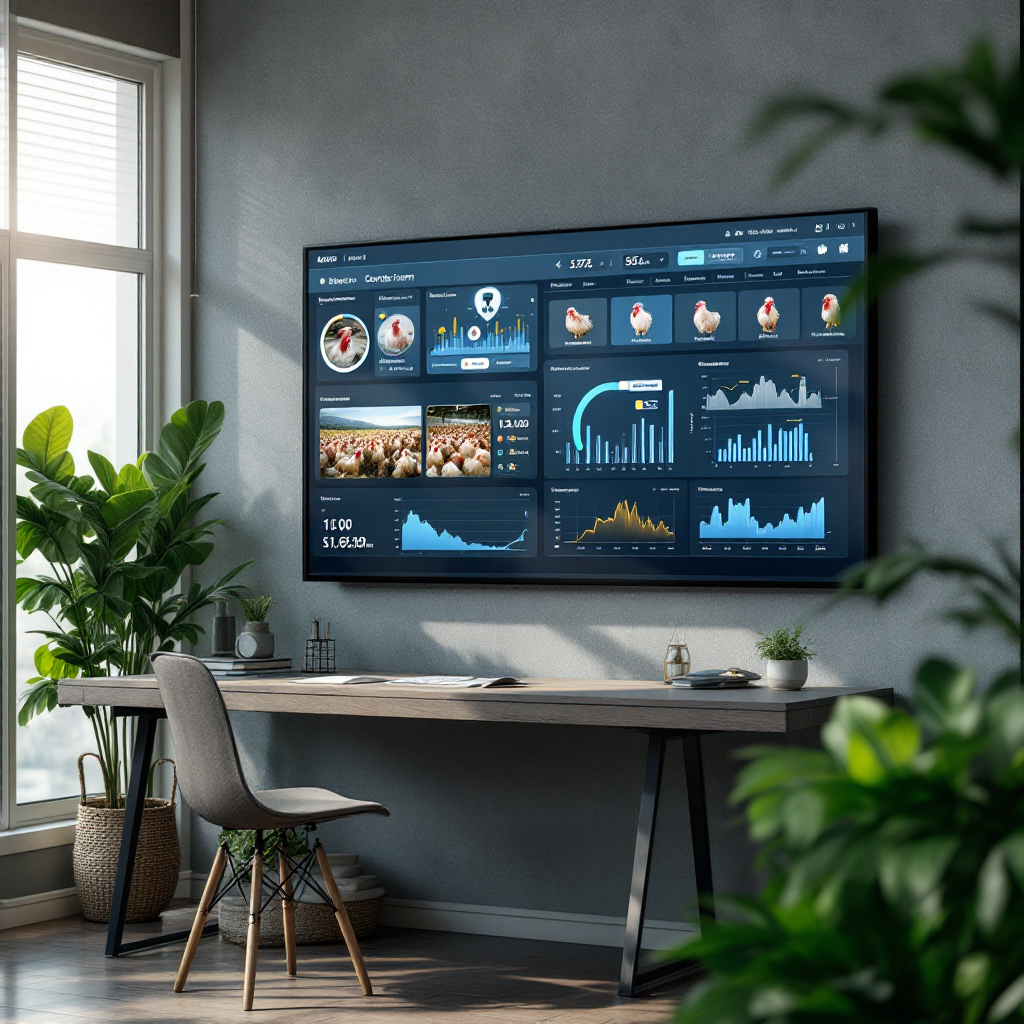
Scalability matters. Cloud and edge options let AI scale from small family farms to large enterprises. Edge processing reduces latency and keeps sensitive video local, and cloud analytics enable multi-site comparisons and trend analysis. For farms that must comply with EU rules, on-prem processing helps because it limits data transfer and keeps models auditable. Visionplatform.ai builds on this approach by letting customers run detection on-site, and also stream structured events via MQTT for BI and OT integration. Those features let teams use camera data for operations and not only security. Therefore the platform helps bridge the gap between surveillance and smart farming.
Beyond cost savings, AI enhances welfare assessment through continuous metrics. Systems calculate welfare indicators such as activity levels, space use, and ventilation response. They also support positive welfare by tracking enrichment use and comfort behaviours. These measures make welfare visible and repeatable, and they let auditors and buyers verify improvement. Farms gain trust, and the poultry industry can show better outcomes for animal welfare and for product quality.
AI vision within minutes?
With our no-code platform you can just focus on your data, we’ll do the rest
farm welfare and welfare and artificial intelligence challenges in livestock farming
Adoption of AI faces technical, ethical, and practical barriers. Models trained in controlled settings often struggle in diverse commercial poultry houses. Researchers call for standardised benchmarks and shared datasets to improve generality and to speed the transfer of ai technology (Green AI for Livestock Perception). Shared datasets would help teams compare performance and energy footprints. Energy-efficient architectures also matter because on-site edge computing must run within thermal and power constraints. Efficient models reduce costs and carbon, and they keep monitoring sustainable.
Ethics and transparency need attention as well. Farms and vendors should make clear how they collect, store, and use data regarding the use of AI, and they should document decision rules when systems suggest clinical action. Animal welfare scientists play a role in defining welfare needs and in setting thresholds for alerts. For example, a professor of animal welfare might advise on early welfare thresholds and on humane intervention protocols. Clear governance reduces privacy concerns and it supports trust among workers, auditors, and customers.
Standardisation also helps with regulatory readiness. Farms that keep models and training local find it easier to comply with emerging laws. Visionplatform.ai supports local model control and auditable logs so teams can demonstrate which data influenced a decision. Still, monitoring is limited by sensor placement and by occlusion when birds cluster. Designers must place cameras and sensors with care and they must validate that the system covers key areas and key welfare indicators. Only then can welfare and artificial intelligence combine to improve real outcomes on the farm.
monitor poultry diseases: animal welfare and productivity strategies
Early warning systems now reduce disease spread and lower treatment costs. AI can detect subtle changes that precede outbreaks, and farms that act sooner cut mortality and antibiotic use. For instance, continuous monitoring can spot abnormal respiratory sounds and it can flag those to managers before clinical signs spread. Integration of health alerts with farm management software speeds response and creates traceable intervention records. Linking alerts to inventory and treatment records also helps teams evaluate outcomes and refine thresholds.
Evidence shows that combined welfare and productivity benefits make a strong business case. Faster detection and targeted interventions reduce losses and improve growth trajectories, and many producers report higher flock uniformity after deploying AI monitoring. Studies show disease detection time falls as much as 40% with AI, and researchers highlight both welfare and economic gains from that speed (Advancements in artificial intelligence technology). These improvements support sustainable poultry production and they align with consumer demands for better chicken welfare.
To monitor animal welfare effectively, farms need both hardware and policy. Sensors for poultry welfare must link to protocols that define who acts, and when. Central dashboards make responsibilities clear, and event logs help with compliance and with continuous improvement. When teams combine AI alerts with on-farm knowledge and with veterinary oversight, they can reduce disease spread and improve the welfare status of flocks. Systems for livestock monitoring therefore become core tools for modern poultry operations, and they help ensure that welfare and production advance together.
FAQ
How does AI help monitor poultry welfare?
AI analyses video, audio, and sensor data to detect changes in behaviour and environment. It provides continuous alerts so farm teams can intervene sooner and protect flock health.
Can AI detect diseases earlier than humans?
Yes. Studies show AI can reduce disease detection time by up to 40% by identifying early signs in movement and sound (source). Early alerts let staff isolate cases and limit spread.
Will AI replace farm staff?
No. AI reduces routine checks and frees staff for targeted care and for tasks that require judgement. It supports labour efficiency while improving welfare and productivity.
Are on-premise AI solutions better for compliance?
Often they are, because they keep data local and make model training auditable. Visionplatform.ai offers on-prem options that help meet GDPR and the EU AI Act needs.
What kinds of sensors work with AI in poultry houses?
Cameras, microphones, temperature and humidity sensors, and CO2 monitors all feed AI models. Combined data gives a richer view of welfare and environment.
How much can AI improve broiler growth?
Research reports growth improvements of about 5–10% when farms use AI to optimise climate and reduce stress (source). Results depend on baseline management and on how teams act on alerts.
What are the challenges of using AI on farms?
Challenges include model generality across diverse houses, energy use for edge compute, and ethical issues about data and decision transparency. Shared datasets and standard benchmarks can help address these gaps.
Can small farms use these technologies?
Yes. Scalable edge and cloud options let small farms adopt AI incrementally. Systems that use existing CCTV and that process locally reduce cost and complexity.
How do AI alerts integrate with farm software?
AI platforms stream events via MQTT or webhooks so alerts can feed farm management systems and SCADA dashboards. This integration speeds response and creates actionable records.
Where can I read more about multimodal AI for poultry?
Start with review articles on digital livestock farming and with publications that examine multimodal systems (Safeguarding digital livestock farming). These sources outline evidence and practical case studies.
For further technical details about event streaming and camera-as-sensor deployments, see our platform pages on people detection and process anomaly detection that explain how structured video events power operational dashboards: people detection overview, forensic search and video search, and process anomaly detection.