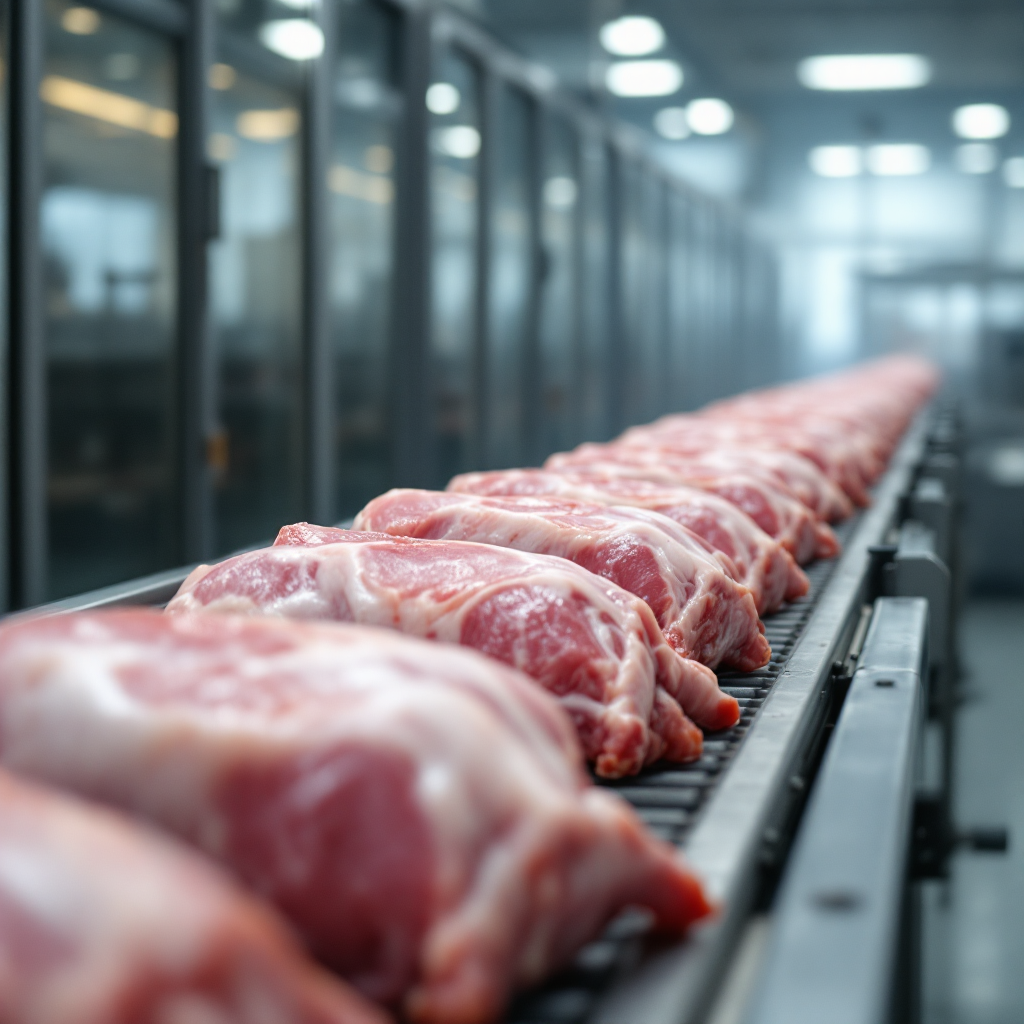
AI in the pig slaughterhouse and abattoir Ecosystem
Artificial Intelligence (AI) now shapes how meat plants run. Farms, transport, and processing lines feed data into a system that detects, logs, and flags issues. For commercial operations this reduces waste and boosts traceability. For example, automated analytics help manage throughput while supporting animal welfare goals. The move from traditional abattoir layouts to monitored, instrumented sites follows demand for higher transparency and better outcomes.
Efficiency drives adoption. Second, welfare monitoring and quality control push processors to add sensors and analytics. Third, regulatory and customer pressure increases the need for documented chain-of-custody and objective measurements. As a result, many pig producers and processors adopt camera-based AI to count and track loads, record anomalies, and timestamp events.
AI also supports animal welfare assessment by providing objective records at scale. This helps with immediate action and with longer-term audit trails. For instance, systems can spot bruising and other indicators that reflect handling practices and transport stress. That data supports assessments of pig welfare and allows teams to identify patterns that point to systemic problems.
Visionplatform.ai designs solutions that make existing CCTV act as a sensor network. Our platform turns a VMS video archive into searchable events and streams detections to operations. For examples of how video analytics serve operational use cases beyond security, see our work on process anomaly detection. In this way, video becomes an active operational sensor rather than passive storage.
Finally, the abattoir ecosystem ties into on-farm records, logistics data, and downstream packing labels. That full chain view improves traceability and feeds industry dashboards. Consequently companies can report on welfare throughout the production chain while streamlining reporting to buyers and regulators.
carcass Detection: From Cameras to Algorithms
Computer vision provides the basics for automatic detection on moving lines. Modern pipelines start with calibrated cameras and lighting. Then images are processed by convolutional neural models that segment, classify, and count items in sequence. These models run on edge appliances or on-prem servers to meet latency, privacy, and EU AI Act requirements.
A notable example is the Detect Cells Rapidly Network (DCRNet) that achieved accuracy above 90% when identifying features related to meat quality and lesions on samples. The study reports a mean accuracy exceeding 90% in detection and counting tasks (DCRNet study). That level of performance shows how deep models can match or surpass human inspection for specific, repeatable tasks.
Compared with manual inspection, AI reduces fatigue-driven errors and standardises outputs. Manual counts vary with shift length and operator training. AI keeps a consistent baseline. For example, detection accuracies reported across several studies range from about 85% to over 95% for image-based tasks, highlighting robust performance across conditions (MDPI review). At the same time, models need tuning to local lines because occlusion, lighting, and speed differ by plant.
This is where camera technology and AI intersect. A computer vision system must be matched to the site. For sites that want to reuse existing VMS streams, a flexible approach is critical. Visionplatform.ai supports adding classes, refining models on local footage, and keeping data on-prem so teams retain control. This helps ensure that automated detection aligns to plant rules and does not force cloud-only workflows.
To sum up, computer vision and AI are now practical for carcass detection. Systems using photographic images can detect blemishes, lesions, and other features rapidly. When combined with model retraining on local data, they become reliable daily tools for quality control and record keeping.
AI vision within minutes?
With our no-code platform you can just focus on your data, we’ll do the rest
automate Counting and Quality Assessment of Carcasses
Counting is a classic application for AI in slaughter. A camera sees each unit and a model classifies and tallies the output. Plants integrate counting logic at trigger points so counts feed the MES and ERP. That synchronisation helps reconcile load weights and labour records.
Automation improves throughput. In many operations AI systems process hundreds of items per hour and deliver near-instant totals to downstream systems. One multilevel evaluation reported significant scaling benefits when systems aggregate counts across sites (science article). Thus processors can scale without raising headcount proportionally, while also improving traceability from farm to pack.
Quality assessment moves beyond counting. Models score fat coverage, muscle conformation, and surface blemishes. They assist with carcass grading and carcass quality decisions by producing consistent, auditable outputs. For example, automated lesion detection supports decisions about carcass condemnations and helps estimate carcass weight when scales are offline. Systems using carcass images make those calls reproducible.
Beyond grading, automated classification supports records for buyers and regulators. A consistent feed of structured events makes it easier to respond to queries about a specific batch. Also be used in audits, these records reduce disputes and speed resolution when claims arise. When combined with weight and lot identifiers, data can feed analytics that improve plant OEE and reduce rework.
Operational teams should design counting logic that tolerates gaps. For instance, when two carcasses overlap the model must resolve occlusion or flag a review event. This is where an ai system that supports incremental model updates on local footage shines. Visionplatform.ai allows retraining on-site, lowering false positives and enabling stable counting at line speeds.
Finally, accuracy matters. High accuracy reduces rework and minimises disputes. The ability to provide timestamped counts that match packing records creates operational confidence and improves downstream logistics planning. This is why many plants pair vision with weight and barcode reads to cross-validate counts in real time.
sensor Integration for Real-Time Carcass Tracking
Sensors extend vision. Weight readers, temperature probes, and environmental monitors add context to image-based detections. A sensor reading can confirm the presence of a carcass at a point and enrich the event with weight or ambient conditions. That fusion improves traceability and speeds root-cause analysis when quality issues arise.
IoT devices and edge gateways stream data into local servers so analysis runs close to the source. For example, using IoT and wearables in farming and processing supports continuous monitoring and feed-forward controls (PMC review). When images, weights, and timestamps align, teams can reconstruct a full processing timeline for each lot.
Sensors and AI work together to alert when conditions deviate. For example, if humidity and temperature cross thresholds a monitoring system can raise a welfare alert and pause the line for inspection. Such alerts support welfare at slaughter objectives and can prevent large batches from being compromised.
Data fusion demands accurate time synchronisation. Cameras, weight cells, and environmental probes must share timestamps so events match across streams. When that occurs, data can be used for automated investigations and for feeding dashboards that show KPIs and trends. These dashboards help operations, QA, and procurement teams.
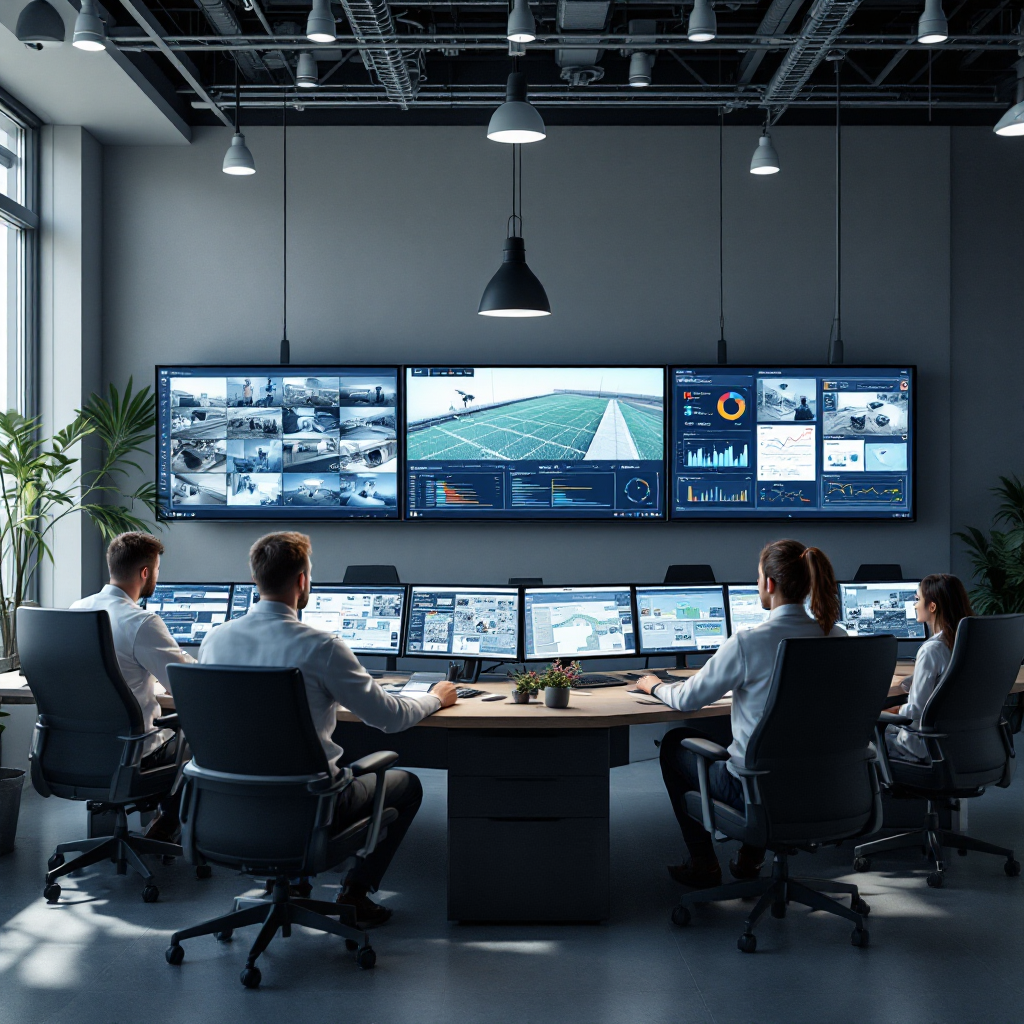
Finally, combined datasets support welfare monitoring in pigs and identify animal welfare indicators at scale. That capability aligns to multilevel frameworks that link farm conditions to slaughter outcomes, enabling better feedback to pig farmers and transport providers.
AI vision within minutes?
With our no-code platform you can just focus on your data, we’ll do the rest
pig farm Connectivity and Livestock Data Management
An effective production chain links pig farm records to packing outcomes. Farm-to-slaughter data integration allows processors to relate on-farm health events to carcass outcomes. That whole-chain visibility supports targeted interventions in transport and handling that improve both animal welfare and meat quality.
Linking health records, batch IDs, and slaughter results lets teams track pleurisy in slaughtered pigs using historical farm data and process images. Cross-referencing such signals helps identify recurring problems in specific barns or transport routes. These insights also support breeding and management decisions, which ultimately affect pig production performance.
Industry-wide analytics benefit from standardised feeds. A multilevel evaluation framework aggregates data across plants and regions so stakeholders can spot systemic trends in animal health and welfare (multilevel evaluation). This approach helps transform isolated observations into actionable programs that raise standards across the supply chain.
At the operational level, processors need practical integrations. Visionplatform.ai connects events to MQTT and to BI systems so camera detections inform dashboards and OEE. This makes video a structured sensor feed rather than an archive. For questions about searchable video and operational use cases see our forensic search in airports page for an example of how video archives can be repurposed for operations.
Finally, end-to-end data flow helps farm teams and pig farmers receive feedback. When carcass lesions or condemnations are mapped to batches, pig farmers can adjust on-farm protocols. This closed loop supports improving welfare and reduces repeat issues, delivering measurable benefits across the livestock network.
Challenges and Future of AI Adoption in the Abattoir
Adoption faces technical hurdles. Occlusion, variable lighting, and model drift challenge consistency on busy lines. Models using training footage from one plant can underperform in another. Thus, sites need workflows for retraining and validation. A system using local footage to refine classes avoids brittle deployments.
Social and ethical issues also matter. Automation can alter workforce roles and reduce manual tasks. That creates welfare issues for employees and requires reskilling plans. At the same time, improved monitoring can increase transparency about animal handling and help reduce welfare issues by flagging poor practices immediately before slaughter.
Regulatory alignment is another factor. Standards for measurement and reporting must keep pace with technology. For example, validation protocols should define how carcass weight, lesion scoring, and other metrics are measured using objective methods. Research conducted using standard protocols helps regulators and industry set thresholds for acceptance.
Looking ahead, edge computing and new sensors will expand capabilities. Cameras, thermal arrays, and LIDAR can combine to reduce occlusion and improve detection of subtle issues such as early signs of pleurisy in slaughtered pigs using image markers. The roadmap includes better model governance, on-prem retraining workflows, and auditable logs to support compliance with the EU AI Act.
Finally, practical deployments require a balanced approach. Combine automated assessment with human oversight. Use camera technology and ai to surface exceptions. Then let trained staff validate and act. This hybrid model protects jobs, raises standards, and ensures animal welfare oversight remains central as operations modernise.
FAQ
How does AI improve carcass counting accuracy?
AI reduces variability by applying consistent detection rules to every image. Systems can operate continuously without fatigue, which lowers missed counts and false positives.
Can existing CCTV be used for automatic detection in slaughter plants?
Yes. Existing cameras often provide sufficient imagery for vision models. Platforms like Visionplatform.ai make it possible to use VMS feeds and keep processing on-prem for compliance.
What accuracy levels have studies reported for carcass detection?
Published work reports accuracies from about 85% up to over 95% for image-based tasks. For example, a review summarised detection ranges across studies (MDPI).
How do sensors and AI work together on a slaughter line?
Sensors provide complementary data such as weight and environmental readings. When fused with camera events, teams get richer context and better traceability for each unit.
Is on-prem processing necessary?
On-prem processing protects sensitive video and helps meet EU AI Act and GDPR needs. It also reduces latency, which is important for real time alerts and operational control.
Will AI replace human inspectors?
AI augments inspectors by handling routine counting and flagging anomalies. Human expertise remains essential for judgement calls and for handling exceptions.
How can farms benefit from slaughterhouse analytics?
Farm teams get feedback on lesion rates, condemnations, and trends that trace back to on-farm conditions. This helps target interventions and improve outcomes over time.
What are common technical challenges?
Occlusion, lighting variability, and model drift are common. Regular validation and the ability to retrain models on local data mitigate these issues.
Can AI identify welfare indicators on the line?
Yes. Systems can identify animal welfare indicators like bruising and skin lesions and log them for review, supporting assessment of pig welfare and welfare at slaughter standards.
How do I start integrating vision analytics in my plant?
Begin by auditing camera coverage and data flows, then run a pilot with a focused use case such as counting or lesion detection. Use local footage to validate models and keep data on-prem for compliance and rapid iteration.