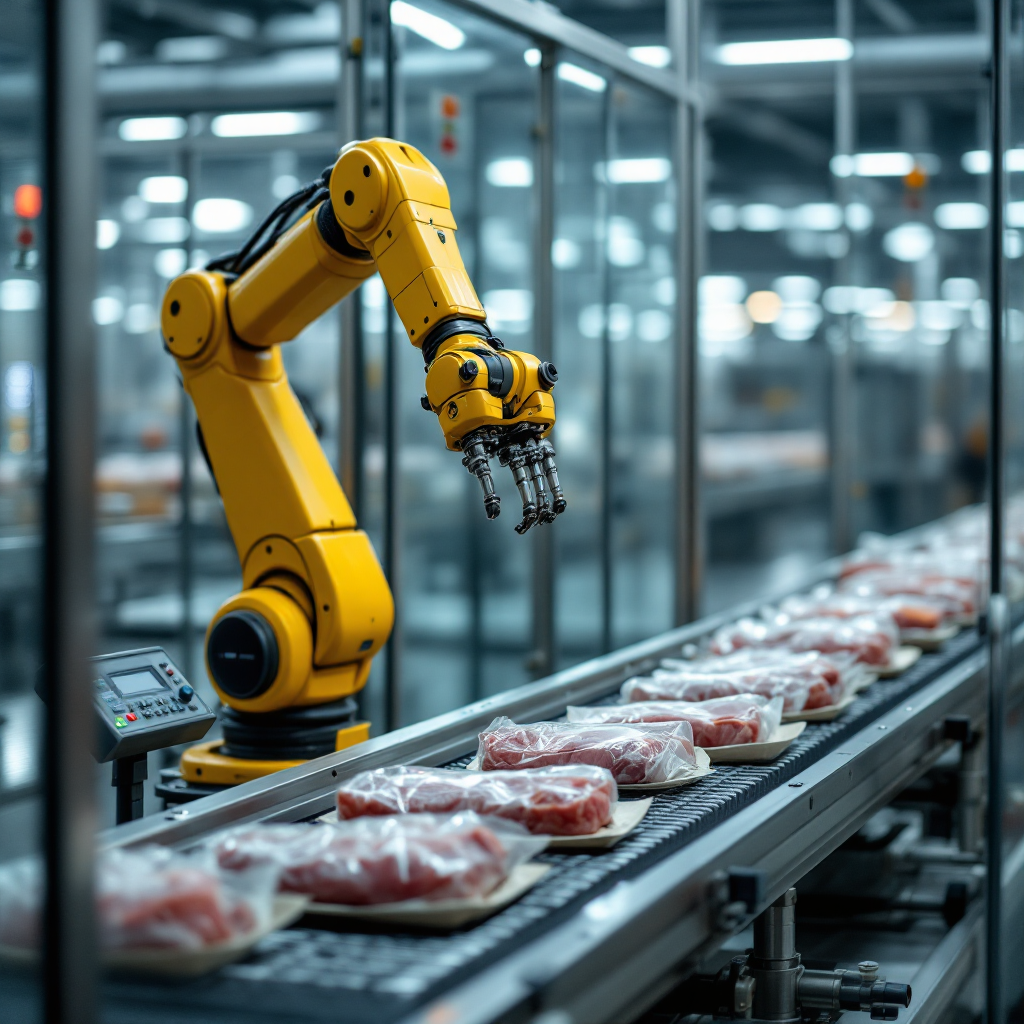
ai and food safety in meat product processing: overview
AI plays a central role in modern food safety for meat product processing. AI systems collect data, analyse it, and act fast. Also, AI helps plants detect hazards early. In simple terms, AI turns cameras and sensors into continuous inspectors. Furthermore, this reduces human error and supports consistent decisions.
First, define the main contamination risks. Microbial hazards such as Salmonella and E. coli threaten product safety. Chemical residues from veterinary drugs or cleaning agents can also appear. Finally, physical hazards like foreign objects and metal fragments pose clear dangers. These categories shape where AI should focus. Also, each hazard maps to a different sensor or analytic approach.
Next, summarise regulatory frameworks that set minimum controls. The EU hygiene regulations require documented hazard analysis and critical control points. The US FSIS guidelines likewise mandate documented controls and traceability for meat product lines. These rules drive investment in automated monitoring. In addition, companies adopt AI to meet or exceed safety standards while maintaining audit trails.
AI supports compliance in several ways. For example, vision-based analytics scan cutting lines to detect gloves, PPE failures, or foreign objects in real time. Also, sensor arrays log temperature and humidity to maintain cold-chain integrity. Visionplatform.ai helps sites repurpose existing CCTV as operational sensors, so cameras feed AI without major hardware changes. This allows firms to own model training and keep data on-prem for GDPR and EU AI Act readiness, and it reduces vendor lock-in.
Finally, the role of AI spans prevention to verification. AI can flag deviations, trigger corrective cleaning, and record corrective actions. Also, AI eases traceability and supports rapid recalls when needed. Consequently, plants can reduce risk and show audited evidence for regulators. As a result, AI is fast becoming a core ingredient in food safety management and food quality control across meat production.
artificial intelligence applications for detection of food contamination in meat product lines
Computer vision provides the first line of defence in many meat product lines. AI-powered vision systems spot discolouration, foreign objects, and signs of spoilage. Also, these systems work at conveyor speed and reduce missed defects. In practice, deep learning models classify cuts and flag anomalies in milliseconds. A real-world study shows a notable drop in incidents. For example, studies indicate that AI-driven contamination detection can reduce contamination incidents by up to 30-40% in meat processing plants. This statistic demonstrates measurable impact.
Sensor networks complement vision. Gas sensors detect spoilage gases, and moisture and temperature sensors follow cold-chain rules. Also, these sensors stream data to ML models for anomaly detection. Then, the models score risk and generate alerts. Furthermore, AI models fuse camera and sensor data to improve accuracy. In this setup, a sudden temperature rise plus visual slime triggers an automated stop of the line. This reduces cross-contamination and prevents unsafe batches from moving forward.
Deep learning algorithms predict contamination hotspots across facilities. These algorithms analyse past incidents, shift patterns, and machine maintenance logs. Then, they identify likely points of failure. As a result, maintenance and cleaning become targeted and timely. Additionally, AI systems create heatmaps that show where contamination risk concentrates. These heatmaps help supervisors prioritise interventions.
Case studies show clear benefits. In one major processing plant, the introduction of vision and sensor fusion cut contamination incidents by roughly a third, while traceability improved across the line. That facility also saw lower waste and fewer recalls. For validation and research, authorities and industry reports document these improvements and recommend broader adoption across the livestock and processing sectors. Also, AI technologies such as object detection, segmentation, and anomaly scoring continue to evolve. Consequently, facilities that integrate AI notice faster detection and more consistent quality control.
AI vision within minutes?
With our no-code platform you can just focus on your data, we’ll do the rest
role of artificial intelligence and ai in food supply chains within the food industry
AI transforms the food supply chain by adding speed and precision. AI-driven blockchain and digital ledgers enable traceability from farm to fork. For instance, AI can correlate sensor timestamps with supply-chain events to locate a contamination source quickly. Also, this approach lets teams run targeted recalls instead of broad shutdowns. A linked review highlights how traceability improvements have enhanced contamination source tracking by around 50% in relevant supply chains. That improvement shortens response times and reduces waste.
Predictive analytics map suppliers, transport legs, and storage nodes to forecast where safety issues may emerge. Also, AI models can flag shipments at risk before they arrive. Then, teams can reroute or hold those loads. Moreover, digital twins simulate contamination scenarios across processing facilities and logistics networks. These virtual replicas let operators test interventions and refine cleaning schedules without disrupting operations. In effect, a simulated failure helps operators act faster in real life.
Integration of AI into the food supply chain also strengthens documentation. Systems automatically record events, cleanse logs, and keep audit-ready trails. Also, this automation supports compliance with food safety regulations and internal policies. Visionplatform.ai streams structured events via MQTT, so camera detections integrate into BI, SCADA, and operations. This means security footage becomes operational data, which helps both safety and production teams. In addition, decentralised on-prem AI maintains data sovereignty while providing actionable alerts.
Supply-chain resilience improves with AI because models spot weak links early. For example, AI might detect recurring temperature deviations across a carrier, then recommend a different logistics partner. Also, AI in food safety helps firms respond in hours instead of days. Finally, the combination of blockchain technology and AI reduces the time to identify contaminated lots, which lowers public health risk and preserves brand trust.
application of ai and artificial intelligence in food for robust safety measures
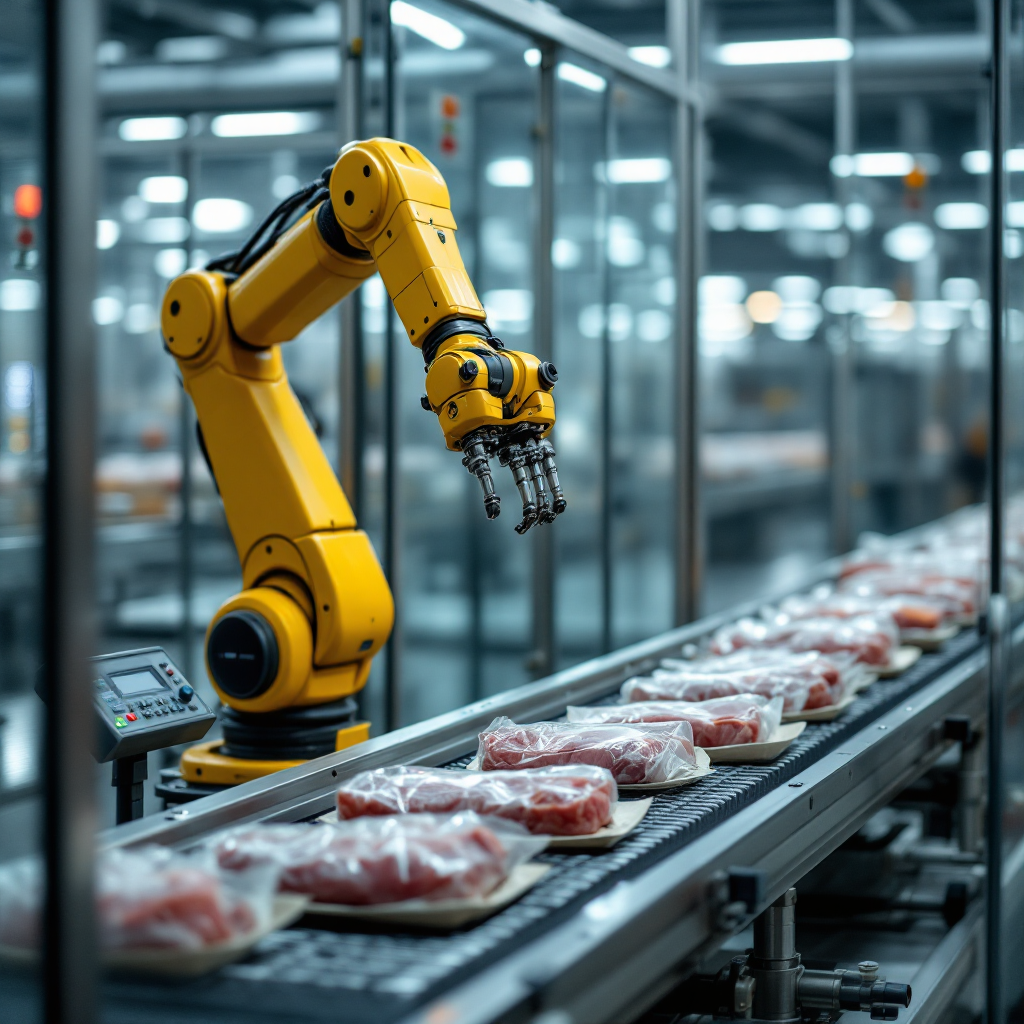
Collaborative robots and automation reduce human contact where contamination risk is highest. CoBots perform hygienic cutting and handling tasks with repeatable precision. Also, CoBots reduce inconsistent handling and the risk of cross-contamination. These robots work alongside humans, and they follow rules set by AI models that detect unsafe behaviours or PPE lapses. For visibility and integration, on-site camera analytics can detect missing PPE and feed alerts into operations. For related camera-driven detections, see practical examples like PPE detection use cases.
AI controls sterilisation systems such as UV and ozone units. Models assess risk and trigger targeted sterilisation cycles. Also, AI can adjust cleaning frequency based on real-time contamination scores. Then, cleaning teams concentrate effort where risk is highest. In addition, process-control systems modify parameters such as temperature and humidity to maintain required conditions. These adjustments happen in real time, and operators receive concise action items.
AI systems also reduce downtime while ensuring safety. For example, automated cleaning schedules shorten line stops by focusing on hotspots. Also, the use of an ai model to predict contamination allows pre-emptive maintenance that keeps equipment hygienic. In short, AI turns reactive cleaning into predictive hygiene. Furthermore, integration of ai technologies with edge devices preserves latency and privacy, so decisions happen fast and locally.
Finally, several companies show measurable gains in product quality and throughput after incorporating AI. Safety controls become smarter, and producers maintain higher throughput without compromising safety measures. As a result, food processing benefits from lower waste and more consistent product quality. Additionally, these approaches align with food safety regulations and support audit readiness across meat supply and processing lines.
AI vision within minutes?
With our no-code platform you can just focus on your data, we’ll do the rest
benefits of ai for food safety measures and quality control in meat product production
The benefits of AI for food safety measures and quality control are clear. AI accelerates recalls and reduces the volume of affected product. Also, AI-enhanced traceability can improve contamination source tracking by roughly half, so interventions are faster and more targeted according to industry studies. That efficiency translates to cost savings and less food waste. In addition, AI improves detection rates for foreign matter and microbial indicators, and it supports consistent product quality.
Consumer trust rises when companies publish data-backed safety records. Also, transparency builds accountability across the supply chain. For instance, audit trails created by AI and blockchain technology help brands demonstrate compliance with food safety standards and food safety regulations. Moreover, a strong safety record reduces reputational risk and supports premium pricing where appropriate.
Quantitative gains include lower waste and reduced recall scope. For example, AI-driven systems often achieve faster root-cause analysis and accelerate targeted recalls. Also, projections for the AI in food safety market show robust growth, with a projected CAGR in the range of 20% through 2030, reflecting rising adoption in meat production and processing sectors and market research. These trends encourage more facilities to integrate AI.
Finally, AI supports both safety and operational KPIs. Systems that detect anomalies stream events to dashboards and BI, which helps cross-functional teams act. Visionplatform.ai specialises in turning existing CCTV into operational sensor networks so teams can stream structured events to their security and operations stacks. Also, this approach allows sites to own models, keep data on-prem, and reduce false detections. Therefore, AI delivers measurable improvements in both safety and product quality while maintaining regulatory readiness.
ai in food safety and future directions in food science and artificial intelligence
The near future will see tighter integration of AI with IoT, 5G, and edge computing. These technologies enable continuous low-latency monitoring. Also, edge deployment helps keep sensitive data on-site and supports compliance with the EU AI Act. Advances in biosensors and deep-learning models promise real-time pathogen detection rather than delayed lab results. Then, operators can quarantine affected batches within hours.
Researchers continue to improve artificial neural network architectures for anomaly detection. Also, combining biosensor outputs with camera data yields richer signals for an ai system to evaluate. In addition, models that learn from a facility’s own video and sensor history perform better than off-the-shelf models. For that reason, companies increasingly prefer an approach that lets them retrain models on local data and keep control of datasets, which aligns with the approach of Visionplatform.ai.
Workforce development remains a key challenge. There is a shortage of interdisciplinary experts who understand AI, data analytics, and food science. Also, firms must invest in training to operate and maintain AI tools responsibly. Furthermore, addressing ethical considerations and data privacy is essential when cameras and sensor networks capture operational data. Companies must balance transparency with privacy and follow food safety regulations and data governance practices.
Looking ahead, combining AI with digital twins and predictive analytics will boost prevention. Also, the industry will see better tools to predict food safety risk and to simulate contamination pathways. Finally, collaboration between food scientists, AI engineers, and operators will be essential. Thus, the continued incorporation of AI across the food system can improve the safety of food products, enhance food quality and safety, and reduce food waste while maintaining audit readiness.
FAQ
How does AI detect microbial contamination in meat product lines?
AI detects microbial contamination by combining indirect signals such as visual spoilage, gas emissions, and temperature anomalies with predictive models. In many systems, AI flags suspicious patterns for lab confirmation, which speeds up risk-based testing and reduces routine sampling burden.
Can existing CCTV cameras be used for contamination detection?
Yes. Cameras can function as operational sensors when paired with AI analytics that detect objects, behaviours, and anomalies. For example, Visionplatform.ai helps repurpose existing CCTV so camera events stream to operational dashboards and trigger actions.
What role does blockchain technology play in food supply chain traceability?
Blockchain technology creates tamper-evident records of events along the food chain, and when combined with AI it helps locate contamination sources quickly. This combination supports targeted recalls and reduces the scale of affected product batches.
How much can AI reduce contamination incidents?
Field studies report reductions in contamination incidents in the range of 30–40% after deploying integrated vision and sensor AI systems. These improvements depend on system design, data quality, and process adoption as studies report.
Do AI systems replace human inspectors?
No. AI augments human inspectors by providing continuous monitoring and prioritised alerts. Humans remain essential for validation, complex decisions, and corrective actions.
Is on-premise AI better for compliance than cloud-only solutions?
Often, yes. On-premise AI keeps sensitive video and operational data in-house, which supports GDPR and EU AI Act compliance. Also, on-prem deployments reduce latency for real-time interventions.
What are digital twins and how do they help safety?
Digital twins are virtual models of facilities that simulate contamination scenarios and process changes. They let teams test interventions and optimise cleaning or maintenance without interrupting production.
How do collaborative robots lower cross-contamination?
Collaborative robots execute repeatable cutting and handling tasks with consistent hygiene controls, which lowers the variability that can lead to cross-contamination. They also work with AI to stop operations when anomalies occur.
What skills do companies need to deploy AI in food production?
Companies need interdisciplinary expertise in AI engineering, data analytics, and food science. Also, training operators to interpret AI outputs and to act on alerts is crucial for successful adoption.
How quickly can AI enable targeted recalls?
With integrated sensors, AI-driven traceability and blockchain, teams can sometimes identify and isolate affected lots within hours. This speed reduces waste and limits public health exposure compared with traditional recall timelines.