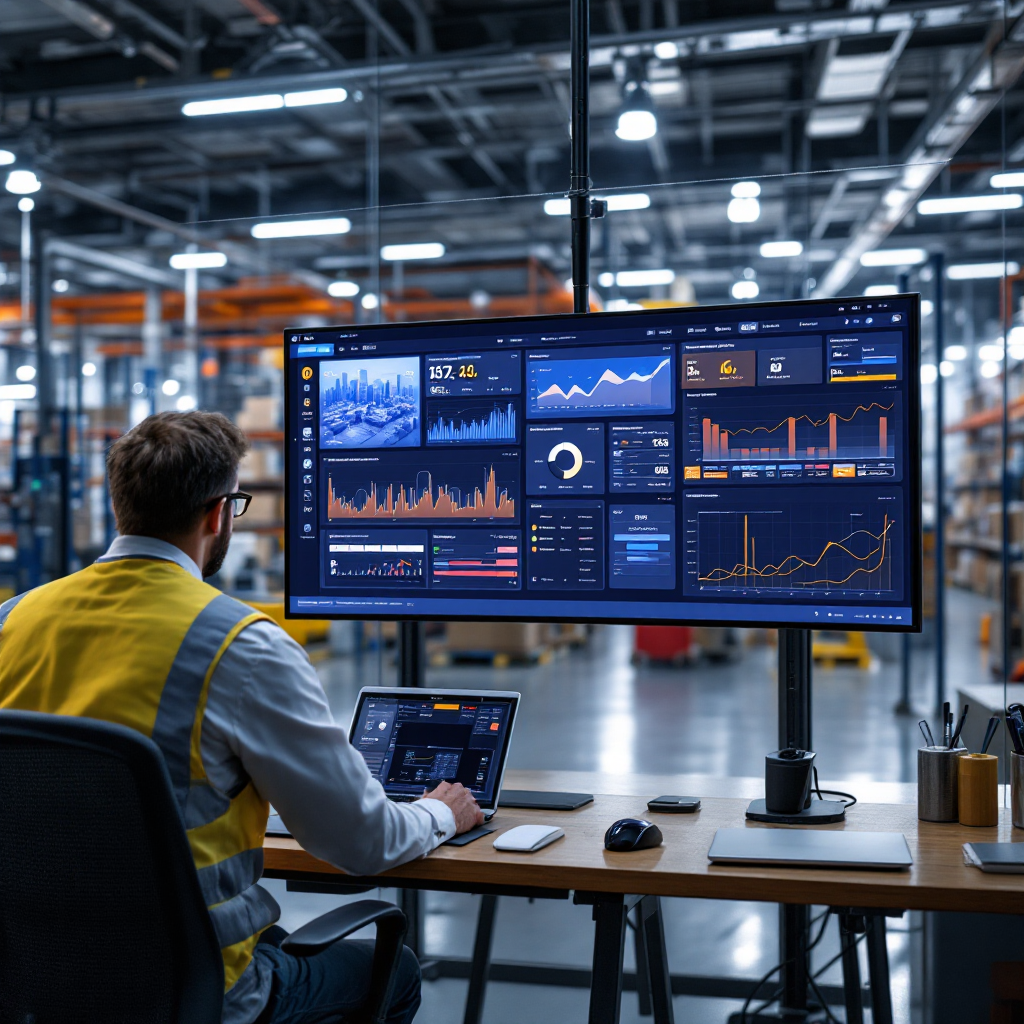
Artificial Intelligence and AI in Food and the Food Industry: An Introduction
Artificial Intelligence (AI) refers to systems that sense, reason, and act. In modern slaughterhouse operations, AI ties together cameras, sensors, models, and automation to improve worker safety and product outcomes. AI is used to process video, to classify objects, and to predict faults. For this reason, AI and artificial intelligence are shaping how the food industry manages risk. Also, computer vision and sensor networks form the backbone of these deployments. They spot people, PPE, and hazards. They log events and feed dashboards. In addition, robotics handle repetitive or hazardous cutting and lifting tasks to automate dangerous work.
The use of AI in food spans several concrete use cases. First, computer vision inspects carcasses for defects and measures meat quality. Second, sensor networks track temperatures and humidity to prevent spoiled food and to reduce food waste. Third, robotics perform precise cuts and handle heavy loads to reduce strain on staff. Moreover, ai-driven analytics merge video and sensor streams to raise alerts in real-time. The integration of artificial intelligence into control systems also improves traceability and supports compliance with food safety standards.
Industry drivers are clear. Workplace injury rates in meat processing can reach 8.5 per 100 full-time workers annually, which is far above many other manufacturing sectors, and that statistic underscores the need for change 8.5 per 100 full-time workers. Also, safety regulations and the Food Safety Modernization Act compel facilities to adopt stronger controls and documentation. At the same time, processors must increase efficiency and reduce food waste to remain competitive. Therefore, the potential for AI to reduce hazards, to enhance quality control, and to improve throughput drives rapid adoption. In practice, an ai system that connects to an existing VMS can turn CCTV into an operational sensor network. For example, Visionplatform.ai converts existing cameras into on-site sensors so plants can keep data private and stay EU AI Act-ready. This approach helps with safety management and with meeting safety standards across the food production lifecycle.
Enhancing Safety: AI Solution for Workplace Safety
AI delivers immediate safety value on the shop floor. First, AI video analytics monitor behaviour and ergonomics. They identify raised risks such as poor lifting techniques and prolonged repetitive motions. They detect unsafe acts in real-time and flag them for intervention. Also, these systems provide heatmaps of activity and zone-specific risk scores. Thus, supervisors get clear, data-driven guidance for safety assessments. An ai model trained on site footage reduces false positives while matching local rules. Moreover, automated alerts let teams act faster so incidents are averted.
Second, collaborative robots remove workers from the most hazardous tasks. Robots can automate cutting, trimming, and heavy lifting. They reduce exposure to knives and to repetitive strain. Pilot projects show results. Some implementations report up to a 30% reduction in workplace injuries through automation and better oversight “automation of pork processing through robotics … offers significant potential to reduce workplace injuries”. Also, full deployments that include sensor fusion and predictive analytics have reduced accidents by 25–40% in early adopter facilities 25–40% reduction in reported accidents. These are measurable improvements.
Third, AI can predict high-risk periods. Predictive models use historical logs, production rates, shift patterns, and environmental data to forecast when incidents are more likely. Then, managers can reallocate staff, pause lines, or adjust lighting and flooring to lower risk. In practice, ai algorithms combine video events with IoT inputs to generate a risk score for each zone. Also, role-based access control and real-time alerts reduce the chance of untrained personnel entering hazardous areas. For further detail on slip and trip detection in operational analytics, see our work on slip-trip-fall detection slip-trip-fall detection. Overall, the implementation of ai improves worker safety, supports workplace safety programs, and strengthens safety practices across the facility.
AI vision within minutes?
With our no-code platform you can just focus on your data, we’ll do the rest
Food Safety, Compliance and Quality Control in Slaughterhouses
Food safety and regulatory compliance are non-negotiable in meat processing. Processors must meet strict food safety standards and document every step. Artificial intelligence helps by automating documentation and by improving detection of contamination risks. For example, AI-powered contamination detection systems inspect carcasses and packaging for visible defects and foreign objects. They can flag deviations to quality teams in real-time. Also, traceability systems that link machine vision with barcode and RFID data provide chain-of-custody records that support compliance.
Quality control benefits when AI joins sensing and analytics. Predictive analytics detect drift in parameters such as temperature, pH, or cut metrics. Then, teams receive early warnings and can adjust processes before product quality degrades. This reduces recall rates and protects product quality. In addition, linking slaughterhouse AI data with broader supply chain platforms enables end-to-end visibility, which strengthens food safety systems and helps ensure food safety down the line.
Regulators and auditors look for proof of consistent compliance. AI systems that keep auditable logs make that easier. Visionplatform.ai emphasizes on-prem processing so data remains under customer control, which supports compliance with the EU AI Act and with privacy regulations. Also, ai-driven inspection improves consistency and reduces human error. The role of artificial intelligence in monitoring hygiene, food handling, and equipment sanitization closes gaps that traditional inspection may miss. For a closer look at the wider resilience of food systems through AI, see research that discusses making food systems more resilient by including AI resilient food systems with AI.
Finally, AI helps with supply chain traceability. Linking slaughterhouse events to inventory and logistics reduces the impact of spoiled food and speeds recalls when they occur. This supports consumer safety and helps secure food systems at scale. In short, integrating AI into quality control and compliance answers regulatory demands while protecting meat quality and product quality on every batch.
AI Video Analytics: Detecting Hazards in the Food Environment
AI video analytics are central to hazard detection in slaughterhouses. Cameras, combined with modern ai algorithms, monitor zones for sharp-tool handling, for slips, and for occluded hazards. These analytics can detect unsafe tool orientation and unusual body posture. They can flag when someone enters a live-line area without required PPE. Also, real-time video analytics reduce the time between an unsafe act and a corrective action. Alerts can be routed to supervisors and to control systems so that lines pause automatically.
Performance metrics for modern systems are strong. Pilot studies demonstrate around 90% accuracy in identifying unauthorized access attempts and unsafe acts 90% accuracy in identifying unauthorized access. At the same time, facilities that use real-time monitoring report faster response times. Incident response can be cut by up to 50% when alerts are combined with procedural playbooks incident response times cut by up to 50%. These gains matter when seconds determine whether an injury occurs or not.
In practice, an ai model detects people, PPE, and custom objects at the edge. This avoids sending raw video to cloud services and helps with GDPR and with the ai act. Visionplatform.ai focuses on turning VMS footage into structured MQTT events so cameras act as sensors for operations. Also, this approach reduces false alarms because models can be tuned to site specifics. For practical examples of detection categories that translate directly to safety KPIs, see our unauthorized access detection work unauthorized access detection. Beyond alarms, analytics can feed OEE, BI, and OT systems so operations and safety teams act from the same data.
AI vision within minutes?
With our no-code platform you can just focus on your data, we’ll do the rest
Automate Zone Access and Improve Food Safety with AI
Zone access control is critical in slaughterhouses. Different zones have different biosecurity and operational risk. Biometric recognition and role-based controls ensure that only trained staff enter high-risk areas. Also, machine vision can confirm that the right person, with the right PPE, is at the right station. When a breach occurs, automated lockdown protocols can isolate a zone and notify safety teams. This limits contamination and protects worker safety.
AI can recognise badges and faces, and it can cross-reference training status and certification records in real-time. Then, the system denies access when credentials are incomplete or when safety conditions are unfavorable. Such controls also support regulatory compliance by maintaining detailed logs of who entered what zone and when. Facilities that deployed integrated access controls observed a 15–20% drop in incidents linked to unauthorized zone access 15–20% decrease in safety incidents. Also, combining access control with environmental sensors can automatically initiate cleaning or a lockdown when contamination risk is detected.
Automate or augment access control to maintain food safety and to reduce cross-contamination. For example, if a camera detects missing PPE at a door, access can be withheld until compliance is restored. Our PPE detection integration shows how cameras can drive immediate, contextual actions PPE detection and enforcement. In addition, process anomaly detection can surface atypical movement patterns that precede safety incidents process anomaly detection. These combined controls form a layered defense that both automates routine restrictions and supports rapid human response when needed. Overall, the integration of AI improves safety and compliance while helping maintain meat quality and food quality across the facility.
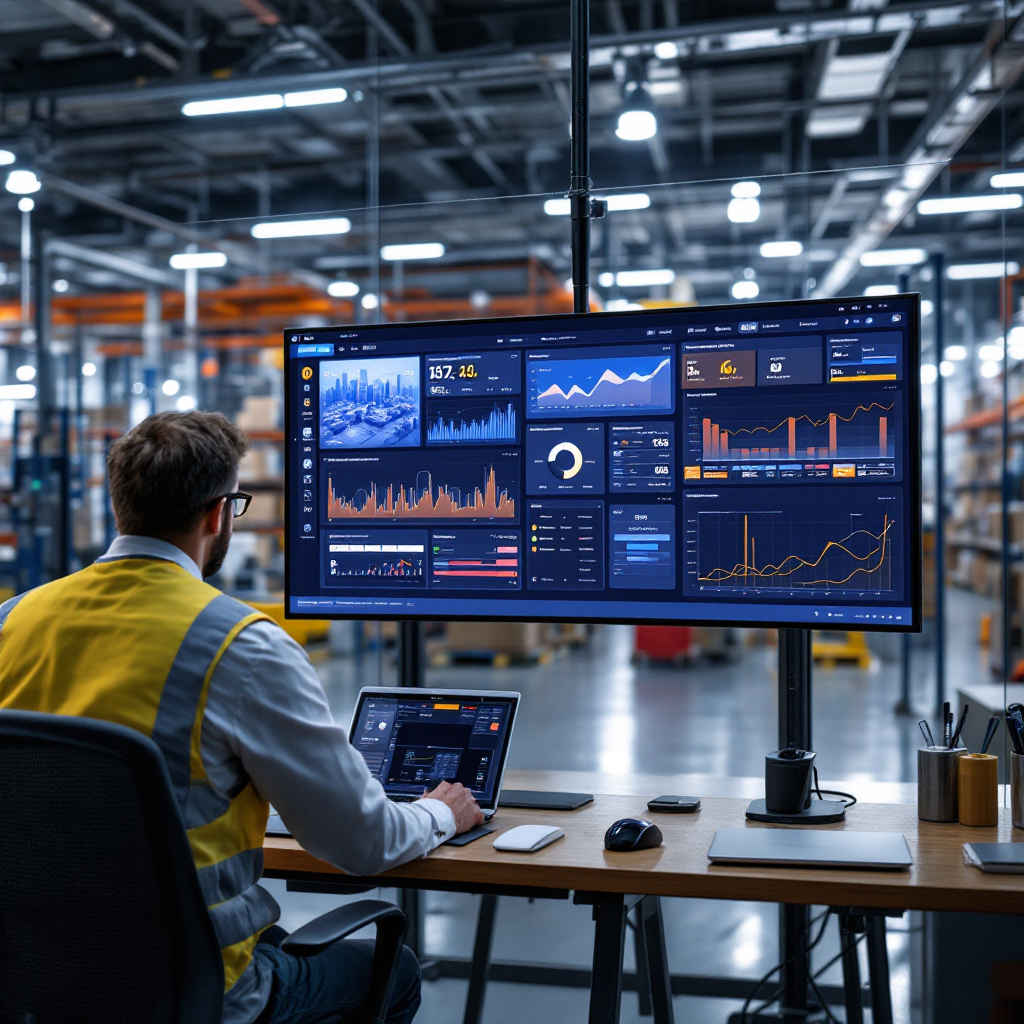
Supply Chain Integration for the Food and Beverage Industry and Beverage Safety
Linking slaughterhouse AI outputs with broader supply chain systems creates resilient food flows. AI data flows into inventory, logistics, and quality systems so every batch has traceable history. For beverage safety and for packaged meat, that traceability is critical. Also, end-to-end monitoring helps reduce spoiled food and prevents compromised product from leaving the facility. By integrating AI events with ERP and SCM platforms, teams can track deviations and isolate affected lots quickly.
IoT sensor networks expand visibility beyond cameras. They add temperature, pressure, and gas readings that feed ai analytics. When a sensor shows a deviation, predictive models estimate spoilage risk and propose corrective action. Blockchain can record key events for immutable provenance. The combined stack secures the food supply chain and supports food safety and compliance across partners. In this way, ai-driven analytics strengthen the food supply chain and enhance consumer safety.
Future outlooks include deeper integration of edge AI, more advanced ai technologies, and tighter links between on-site analytics and cloud-based orchestration. The potential for AI to detect safety and to predict quality drift will keep growing. Advanced AI will enable proactive safety practices and help ensure food safety at scale. For those looking to incorporate vision at the edge while keeping data private, Visionplatform.ai provides a path to turn cameras into operational sensors, to own models, and to stream events into your stack. Ultimately, incorporating ai across the food system will reduce food waste, improve meat quality, and help secure global food chains while meeting safety regulations and consumer expectations.
FAQ
What is AI video analytics and how does it help slaughterhouse safety?
AI video analytics use computer vision and ai algorithms to detect people, PPE, and unsafe behaviours from camera feeds. They issue real-time alerts and create auditable logs so supervisors can intervene faster and reduce workplace safety incidents.
Can AI reduce workplace injuries in meat processing plants?
Yes. Pilot projects and studies report injury reductions in the range of 25–40% with AI-enabled monitoring and automation 25–40% reduction. Robots and real-time alerts remove workers from the most hazardous tasks and improve worker safety.
How does AI support food safety compliance?
AI supports compliance by automating inspection, by maintaining auditable records, and by improving traceability through integration with supply chain systems. These capabilities make it easier to meet food safety standards and to respond to audits and recalls.
Are there privacy concerns with camera-based AI in slaughterhouses?
Yes, especially where personal data is processed. To address this, on-prem or edge processing keeps raw video local, and systems can publish only structured event data so teams get the insights they need without exposing video off-site.
What performance can facilities expect from AI access control?
Early adopters report high accuracy and measurable reductions in incidents. Studies show around 90% accuracy in spotting unauthorized access attempts and about a 15–20% drop in related safety incidents 15–20% decrease.
How does AI help with quality control and traceability?
AI inspects product attributes, monitors process parameters, and links events to batch records. This gives teams early warning of deviations and reduces the scope and cost of recalls by improving traceability.
Can AI be integrated with existing VMS and control systems?
Yes. Platforms that work with common VMS standards can convert CCTV into an operational sensor network. For instance, Visionplatform.ai integrates with leading VMS to publish events over MQTT so operations and security share the same data.
Will automation displace workers in slaughterhouses?
Automation changes job tasks more than it eliminates all roles. It removes people from hazardous tasks while creating new roles in supervision, maintenance, and data analysis. Training and reskilling reduce potential negative impacts.
What role does predictive analytics play in safety?
Predictive analytics forecast high-risk periods and zones by analysing historical and live data. This allows proactive interventions so teams can alter staffing, adjust processes, or pause lines to prevent incidents.
How do I get started with AI in my facility?
Begin with a focused pilot that addresses a clear safety or quality problem. Use on-site data, choose models that can be tuned to your site, and integrate events with your VMS and operational systems. For slip and fall analytics or PPE detection examples, explore slip-trip-fall and PPE detection case studies slip-trip-fall, PPE detection.