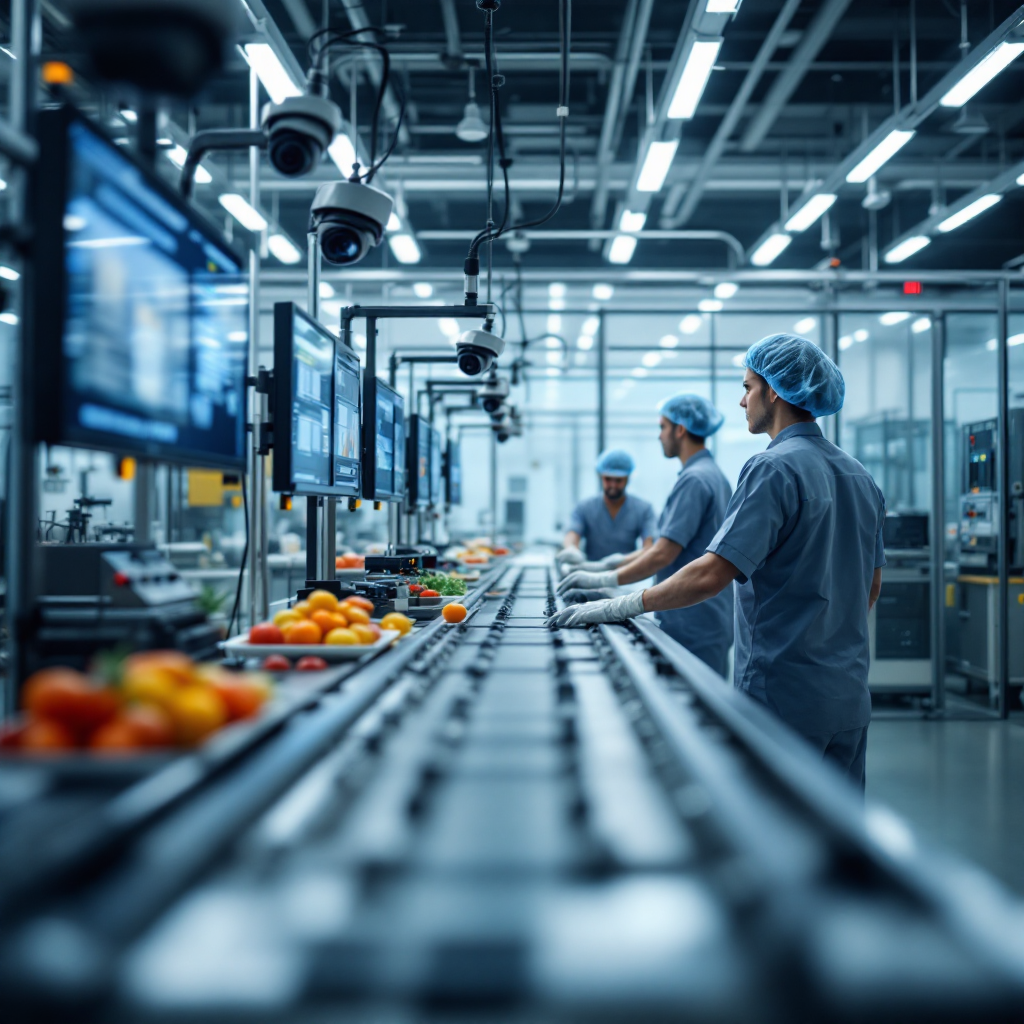
Introduction to AI video analytics in rendering and offal processing
AI is reshaping how rendering and offal processing operate. Analytics reveal where material bottlenecks form, and AI helps to automate responses. First, analytics show inefficiencies in offal sorting and material flow by turning hours of cameras into searchable event logs. For example, plants that apply automated monitoring cut manual inspection time drastically, and this is supported by growing research on big data in food systems Big data analytics in food industry. Second, AI systems classify by-products such as organs, bones, and connective tissue fast, which reduces error and speeds throughput.
In practice, AI video analytics provides real-time visual cues. Cameras capture video footage and an edge device runs object detection and classification without sending raw video offsite. That approach helps with GDPR and the EU AI Act because data can stay on-premise. Visionplatform.ai designs solutions that use existing VMS and CCTV so operators can integrate vision outputs into dashboards and SCADA. Our platform can also publish structured events to MQTT so operations teams see KPIs rather than only security alarms, which helps production managers optimize flow.
Analytics and machine learning combine to highlight repeatable problems in conveyor zones, feeders, and separators. Using machine learning and deep learning, plants track how often a conveyor accumulates excessive offal, then adjust feed rates. This kind of monitoring system supports audits and provides auditable logs for compliance and traceability. In addition, academic work shows AI in food processing is a major focus for current research A future focus, and companies report measurable boosts in efficiency and waste reduction when they apply these tools How do pet food companies communicate sustainability practices.
AI helps to automate routine checks, and it assists human staff with alerts when anomalies appear. Using AI to analyze video provides continuous oversight so staff can focus on exceptions. For plants that want a controlled, auditable AI deployment, on-prem edge processing is a practical route. This model helps rendering plants improve throughput, reduce waste, and keep data local for regulatory readiness.
Core technologies behind modern processing solutions
Computer vision and related imaging systems form the backbone of modern rendering sites. Computer vision uses deep learning to recognise offal types, detect contaminants, and spot foreign objects on conveyor belts. Deep learning models trained on labeled images help classify giblets, livers, hearts, and connective tissue. These models use convolutional neural network layers and sometimes a neural network architecture tuned for texture and colour features. When a model flags an anomaly, operators act immediately.
Video analytics runs continuously, analysing video streams frame by frame for object detection and quality checks. Video frames are inspected for size, shape, and surface defects. The system then timestamps events so managers can trace a defect back to a specific batch. These monitoring systems reduce inspection variability and provide consistent records for audits. In many cases, edge devices perform initial inference to keep latency low and preserve bandwidth. Edge processing moves detection close to the camera, and it reduces the need to send volumes of video data to the cloud. That is why edge ai devices and powerful edge devices such as NVIDIA Jetson are common in processing facilities.
To integrate sensors with vision, an ai system will combine thermal, weight, and pH sensors to give richer context to each camera event. Integration of ai and sensor data makes it easier to predict spoilage or contamination. For example, combining weight sensors with vision systems improves sorting accuracy for bones versus soft tissue. This integration supports precise robotic picking and helps to optimize cutter settings. System builders use ai models and a learning model strategy to update classifiers as raw material characteristics shift across seasons.
Computer vision techniques and computer vision and machine learning together create robust inspection pipelines. Producers that adopt these approaches can shift from purely manual inspection to semi-automated checks that free staff to manage exception workflows. The result is better resource use and higher throughput with fewer rejects.
AI vision within minutes?
With our no-code platform you can just focus on your data, we’ll do the rest
Implementing automation and real-time decision-making
Automation in rendering plants often starts with conveyor-belt sorting and robotic handling guided by AI alerts. Automation saves time and improves workplace safety, and it improves consistency across shifts. AI cameras and vision systems detect items that need to be diverted, and a robotic actuator executes the physical action. This reduces routine handling and helps to maintain hygiene standards. AI processing drives that decision chain by converting detections into control signals for actuators.
Real-time systems provide instant feedback so machines can adjust settings without delay. Real-time monitoring lets a processor change cook times, blade positions, or conveyor speeds based on live observations. The system can also pause a line if an anomaly is detected and a human must inspect a suspicious item. This approach combines predictive analytics with rule-based thresholds to reduce waste. In pilot projects, rendering plants have reported up to a 30% increase in throughput and a 20% drop in waste when AI and automation are combined pet food sustainability study. That statistic supports investments in live detection and control.
AI algorithms and ai algorithms tuned for fast inference ensure decisions land within a few video frames. A real-time video analytics deployment must balance model complexity with latency. If models are too heavy, they slow down decisions; if they are too light, they miss subtle defects. An optimal system will deploy compact deep learning models on edge devices while training larger models offline for periodic updates. Integrators use automated retraining pipelines so the learning model stays current as raw material appearance changes.
Video analytics solutions come as off-the-shelf modules or customised stacks. Off-the-shelf tools speed deployment, but custom solutions fit site-specific needs better. At Visionplatform.ai, we help plants integrate camera outputs into OT and BI systems so alerts are actionable beyond security. Our platform streams events over MQTT to feed dashboards and production systems so automation is not only about alarms but about operational control. This integration reduces false alarms and ties vision detections to robotic actions.
Ensuring food quality and regulatory compliance
Food quality metrics in rendering include texture, colour, foreign material presence, and proper separation of species. AI inspects product quality by scanning surfaces for discolouration and structural defects. The system flags contaminants such as plastics, metal fragments, or unexpected tissue types. AI provides time-stamped evidence that supports traceability and corrective action. Plant managers can then use those logs to verify that a batch meets the required standard.
Compliance relies heavily on auditable records. Automation can help keep data so compliance teams can show adherence to EU and FDA rules. To support audits, AI provides structured event logs and video clips tied to specific lot numbers. This helps with the gdpr and eu ai act requirements because data ownership and local processing are highlighted when events remain on-prem. Our platform enables customers to keep data in their environment and to configure transparent detection rules so compliance officers have clear records.
Using artificial intelligence to support regulatory work reduces inspection backlogs and improves recall responses. AI helps identify suspect materials early, and it shortens response times. For processors in the food supply chain, automated logging and searchable video footage make it easier to trace origin, process parameters, and test results when regulators request them. The strategy also supports conventional food processing upgrades and enables better coordination across the food system.
Food quality is also about prevention. Predictive analytics on process variables and video analysis can forecast when a dryer or cooker will drift out of spec. Then teams schedule maintenance before product quality suffers. This proactive stance reduces downtime and keeps product quality high, which is essential for pet food and human food markets alike.
AI vision within minutes?
With our no-code platform you can just focus on your data, we’ll do the rest
Leveraging data analytics and AI solutions for insight
Data analytics converts raw detections into actionable intelligence. Aggregating events across shifts reveals trends, bottlenecks, and failure modes. Analytics work by correlating video events with throughput, sensor readings, and maintenance logs. That combined view supports targeted interventions and helps management measure OEE. Big data analytics can handle the volumes of video data that modern plants generate, and it feeds predictive models that forecast line stoppages or contamination risks industry review.
AI solutions can be narrow or broad. A narrow ai-based classifier might focus on organ type identification, while an ai-powered video analytics installation could track every conveyor segment and provide heatmaps of activity. Case studies show tangible results: some rendering operations report a 30% throughput gain and a 20% waste reduction when they combine vision, weight sensors, and automation. Those figures are reinforced by industry reporting on sustainability in pet food supply chains sustainability research.
Using ai in a production environment requires careful planning. Start by defining what to measure, then choose imaging systems and cameras and video placements that capture the key views. Then, train computer vision models with labeled samples from your site. Using artificial intelligence and learning techniques that include augmentation and edge validation reduces false positives. Visionplatform.ai recommends retaining training footage locally and iterating models with on-site data so results remain reliable and private. This method follows recommended practices for integration of ai across operations.
Analytics and machine learning help teams prioritize capital projects. For example, data processing that shows frequent blockages at a feeder can justify redesign investment. The power of AI is not only in detecting defects but in highlighting where investments yield the best returns. With the right analytics market tools, teams move from reacting to planning based on reliable insight.
Sector-specific use cases and future developments
Poultry processing presents unique challenges because of feathers, giblets, and fast line speeds. Poultry processing lines require robust object detection tuned for small, irregular shapes and variable lighting. Video analysis can separate feathers and blood residue from edible offal, which helps to reduce cross-contamination and improves rendering input quality. For poultry processing, minor misclassifications can cascade through the supply chain, so processors need reliable ai models and tight feedback loops.
Using artificial intelligence alongside laboratory methods will extend capabilities. For instance, multi-modal fusion of cameras and mass spectrometry offers species and body-part identification that is more accurate than vision alone. Research on machine learning for species identification supports this route machine learning for species identification. Combining these modalities helps rendering plants meet stricter provenance and food quality checks.
AI solutions are also becoming modular so small and large plants alike can deploy capabilities quickly. Modular kits include cameras, an edge server, and pre-trained models that are tuned with site images. Edge ai hardware is evolving too, and new chips deliver low-power, high-accuracy inference suitable for continuous operations. As edge processing improves, plants will shift more analytics to the line, which reduces latency and helps to automate corrective actions sooner.
Future developments will focus on explainability and integration. Reliable AI must be auditable and transparent so regulators and plant staff trust its outputs. To support this, vendors will provide tools that show which video frames led to a detection and present confidence scores alongside suggested actions. That makes it easier to train operators and to refine ai algorithms over time. Overall, the processing industry stands to gain efficiency, waste reduction, and better traceability by adopting imaging systems and advanced ai while keeping data ownership at the site level.
FAQ
What is AI video analytics and how does it apply to rendering?
AI video analytics combines computer vision and machine learning to monitor video streams and detect objects and anomalies. In rendering, it classifies offal, finds contaminants, and creates time-stamped logs to support quality control and traceability.
Can AI reduce waste in offal processing?
Yes. Plants that apply AI to sorting and defect detection can reduce waste by improving separation accuracy and by adjusting process parameters faster. Studies and industry reports show single-site gains such as a 20% reduction in waste when video analytics is combined with automation research example.
Do these systems require cloud processing?
No. Edge ai and on-prem deployments allow inference to run locally, which reduces bandwidth needs and helps with regulatory requirements like the EU AI Act. Keeping processing local also preserves privacy and avoids continuous streaming of raw video offsite.
How accurate are computer vision models for product quality checks?
Accuracy depends on training data and model choice. Deep learning models trained on representative site footage perform well for texture and colour checks. Performance improves when models are retrained on local samples and when they are combined with sensors such as weight and temperature.
What sensors work best with vision systems?
Cameras pair well with weight sensors, thermal sensors, and pH or conductivity probes to provide richer context for detections. Integration of ai and sensor data reduces false positives and supports better decision-making.
How does Visionplatform.ai help rendering plants?
Visionplatform.ai turns existing CCTV into operational sensors, integrates detections with VMS, and streams structured events for operations. That approach helps plants use camera data for KPIs and reduces the need for cloud data transfers. Learn about related detection capabilities such as process anomaly detection for similar workflows process anomaly detection.
Is retraining models difficult?
Retraining can be straightforward when the platform allows local training on site footage. Best practice uses a flexible model strategy: pick a base model, refine it with site classes, or build from scratch using local video. This keeps models relevant as raw material changes.
How are compliance and traceability handled?
AI provides time-stamped logs and event clips that link detections to lot numbers and process parameters. Such records support audits and help demonstrate compliance with hygiene and traceability standards. Systems that keep data on-prem simplify GDPR and regulatory compliance.
Can small plants benefit from AI as well as large ones?
Yes. Modular ai solutions and pre-configured kits let smaller processors deploy cameras, edge processing, and analytic dashboards without large upfront engineering. These modular kits scale with needs and reduce barriers to entry.
Where can I read more about deploying vision for operations?
Start with vendor resources that explain camera integration and MQTT event streaming for dashboards. For examples of related detection technologies and counting use cases, see people-counting and related detection pages people-counting and explore other detection features like people detection for operational monitoring people detection.