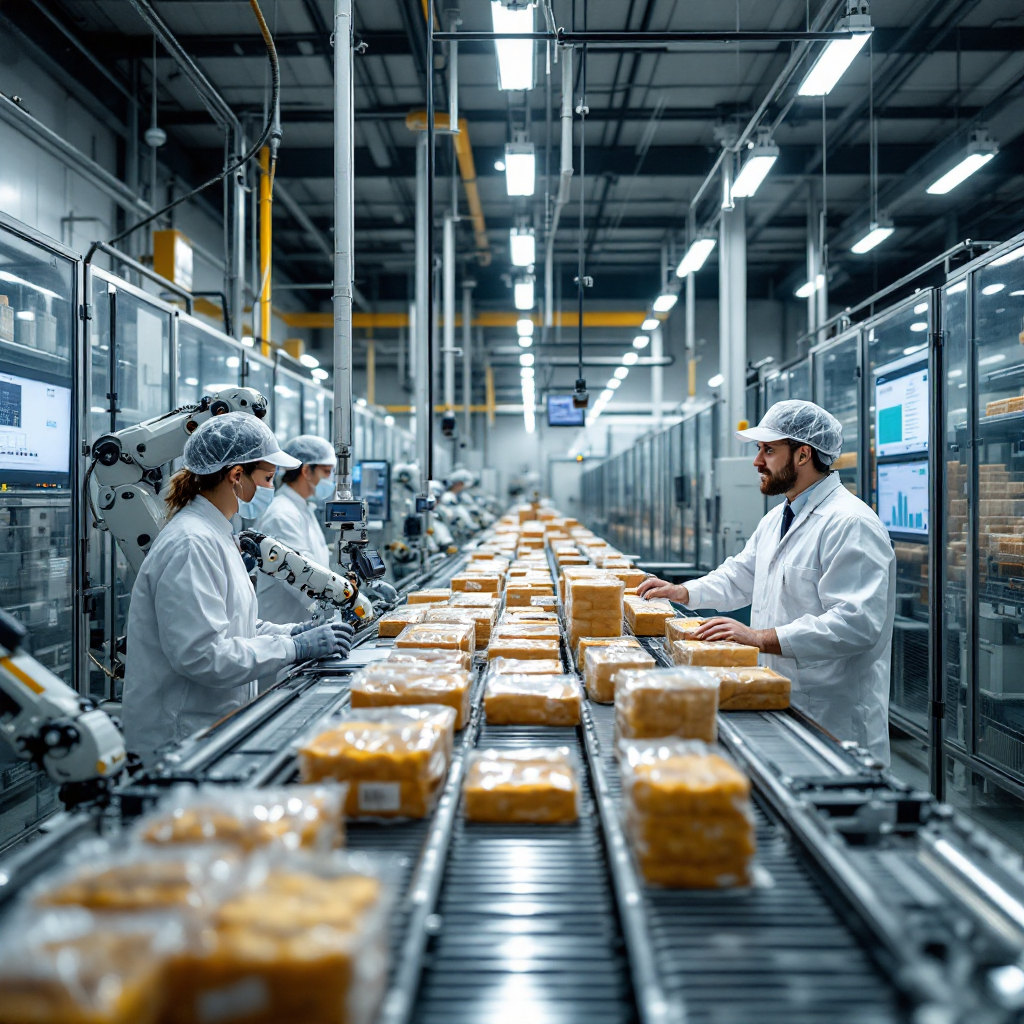
Chapter 1: ai is making a difference in meat production
AI is making clear improvements inside modern slaughterhouses and cutting lines. First, AI helps operators monitor production data and take action fast. For example, AI systems can analyze throughput and flag a slowing packing lane. This helps meat processors spot bottlenecks. Then supervisors can reassign staff, adjust speeds, and reduce queues. Studies show that real-time monitoring can boost line speed by up to 20% when teams follow AI recommendations; see an overview of production optimization for details ici. At the plant level, operators combine CCTV with AI to track flow across production lines. Visionplatform.ai converts existing cameras into operational sensors. Our platform publishes structured events for dashboards and OEE views so teams can act on data faster. This ties production data to staff decisions in a single loop, and it helps streamline shift handovers.
AI models apply machine learning and deep learning to classify cuts, predict throughput changes, and forecast maintenance needs. The approach reduces manual labor on repetitive checks while improving consistent quality. Processing operations generate vast production data. AI systems can analyze that data to detect patterns and improve operational efficiencies. In the meat plant, teams use computer vision to check size and shape, confirm weights, and monitor packaging integrity. In addition, people-counting metrics on camera feeds help managers balance staff against demand; this resembles how people-counting solutions work in airports ici. As demand for meat production grows, facilities need tools to handle variability. Advanced AI gives managers the analytics to react within minutes, not hours. As one review put it, “Artificial Intelligence is revolutionizing the food industry by optimizing processes, improving food quality and safety, and fostering innovation” source. Thus AI is making measurable improvements to throughput and to consistent quality in modern factories.
Chapter 2: leverage ai and automation in meat processing
Leverage AI and automation to raise precision and cut variability on cutting lines. AI-powered vision robots inspect carcass geometry and guide blades with millimeter accuracy. This reduces trimming errors and helps meat and poultry processors meet weight and grade targets. In poultry and beef plants, AI-powered vision systems have helped reduce discard levels by as much as 40% in reported studies source. These systems use imaging technologies and hyperspectral imaging when needed to detect subtle differences in tissue and to improve grading. In practice, one major company deployed camera-guided cutting to enhance yield. Cargill and other large processors now test camera-guided cutting systems to improve product consistency and to speed production without sacrificing safety.
Robotics integrate with vision systems and with PLCs on production lines. Together they automate repetitive tasks such as portioning, deboning, and box packing. Many meat processing plants adopt robot arms that pick and place portions into trays. This helps reduce manual labor and also reduces human exposure to sharp tools. For safety and compliance, systems can stream alerts and events into MES and SCADA tools. Visionplatform.ai supports publishing camera events for operational dashboards so teams can see camera detections as machine data. In addition, plant teams use AI to detect foreign materials, to grade marbling, and to ensure traceability across batches. For more on how camera events become operations data, see our process anomaly work for airports exemple. The combined effect of robotics and advanced AI is to optimize throughput, to preserve product quality, and to reduce waste in measurable ways.
AI vision within minutes?
With our no-code platform you can just focus on your data, we’ll do the rest
Chapter 3: automation in the production process to optimize outcomes
Automation and AI work together to optimize the production process and to improve uptime. Predictive maintenance is central. Machine data feeds into machine learning models that forecast failures before they occur. As a result, plants cut unplanned downtime by up to 40% in similar manufacturing contexts study. The system flags an unusual vibration or temperature spike and schedules a brief check. Then technicians intervene during planned windows. This reduces emergency repairs and lowers repair bills. It also keeps production speeds steadier.
Workflow scheduling balances line speed with equipment care. Advanced scheduling uses AI to plan maintenance slots and to sequence product runs so changeovers cost less time. This helps meat processing plants meet tight delivery windows and maintain consistent quality. Energy management ties into the same control layer. AI optimizes chillers, compressed air, and ovens to reduce consumption. Industry figures suggest energy savings of 10–15% when facilities apply intelligent control source. The combined effect is greater operational efficiencies and lower cost per kilo produced. In larger facilities, integrations connect cameras, PLCs, and MES so that vision systems and sensors feed a single operational view. That helps line managers prioritize actions and to run production lines smoothly.
Plant teams also focus on being scalable. Scalable AI solutions let sites pilot small features then extend them across a plant or across multiple plants. For example, Visionplatform.ai runs on-prem or at the edge to keep data private and to fit regulatory compliance needs. This supports GDPR and EU AI Act readiness while keeping control inside the factory network. This supports GDPR and EU AI Act readiness while keeping control inside the factory network. As labor shortages persist, automation helps maintain output. In short, automation paired with advanced AI streamlines operations and improves both uptime and product quality for meat and poultry processing.
Chapter 4: quality control and food safety in automated factories
Automated quality control uses imaging and AI to detect defects and to grade cuts. AI-powered vision inspects size and shape, fat distribution, and surface defects. These systems improve grading and consistent quality control across shifts. For example, hyperspectral imaging and deep learning can identify marbling patterns that humans miss. AI models classify those patterns and assign grades faster than manual review.
AI systems can analyze camera feeds to detect foreign materials in product flows. That capability reduces recalls and supports traceability across batches. Machine learning links inspection results to batch records so teams can trace any issue back to a processing step. This improves regulatory compliance. Many facilities work to meet EU and FDA standards by integrating automated inspections into their QA flows. When a camera flags a potential contamination event, systems can stop the relevant production line and trace affected carcass IDs. This helps ensure regulatory compliance and helps protect the consumer.
Ensuring food safety remains the top priority. Automated inspections increase detection rates while reducing operator fatigue. That helps maintain high product quality and customer satisfaction. Computer vision and imaging technologies apply in packaging, labeling, and pallet checks. In addition, AI helps detect defects in real-time and to route suspect pieces for human review. These hybrid workflows combine automated checks with human oversight to deliver product consistency and to lower risk. Visionplatform.ai streams detections to operators and to business systems so alerts become actionable metrics, not only security alarms. This operational approach supports both quality control and ensuring food safety across meat processing operations.

AI vision within minutes?
With our no-code platform you can just focus on your data, we’ll do the rest
Chapter 5: ai in predictive maintenance and downtime reduction
Predictive maintenance uses AI to forecast when a component will fail. Machine-learning models learn from vibration, temperature, and current signatures. They forecast issues so teams can schedule a quick service. This reduces stoppages and lowers repair bills. The approach also helps small meat processors and large integrators to plan spare parts and to avoid rush shipments. Sensors such as accelerometers and thermal probes feed the models. Integration with MES and SCADA yields automated alerts and work orders that technicians receive on mobile devices.
IoT sensors, cameras, and PLC data combine into a single health index for each machine. AI aggregates that index to detect anomalies. When a conveyor shows a drift in speed that precedes a motor fault, the model raises an alert. That lets staff intervene during a planned break. The approach improves mean time between failures and raises overall equipment effectiveness. In practice, it reduces unplanned stoppages and supports longer asset life. For meat and poultry processors, fewer stoppages mean fewer delayed shipments and more stable production speeds.
Integration matters. Visionplatform.ai connects camera events to operational systems so that mechanical alerts appear alongside visual signs. This helps technicians see both the sensor alarm and the related video clip. The result is faster diagnosis and simpler root-cause analysis. When teams deploy ai-driven maintenance at scale, costs fall and uptime improves. The measurable benefits of predictive maintenance include fewer urgent repairs, a clearer spare parts strategy, and better alignment of staff tasks with plant needs.
Chapter 6: Future outlook: ai-driven transformation in meat processing
The market outlook shows rapid expansion. The AI market in the food sector is estimated at US$9.68 billion in 2024 and projected to reach US$48.99 billion by 2029, a CAGR of 38.3% source. This growth reflects broad interest in AI solutions across the processing industry. Many companies plan to move from pilots to plant-wide rollouts. Leaders now focus on ROI tracking and on how to scale solutions effectively analysis. Those projects often start with vision systems and expand into predictive maintenance, scheduling, and energy control.
Strategic steps include staff training, a clear data strategy, and careful vendor selection. Facilities should plan for data privacy and for on-prem processing where required. Visionplatform.ai supports on-prem and edge deployments so companies can own their models and datasets, meeting the EU AI Act and GDPR expectations. Teams also need to document benefits of ai, to measure yield gains, and to track reduced rework. Automation helps address labor shortages while enabling consistent quality and improved customer satisfaction.
Future systems will combine advanced imaging technologies, hyperspectral imaging, and deep learning to detect defects earlier. They will streamline traceability, help detect foreign materials, and make supply chain audits simpler. AI is reshaping the global meat supply by enabling precision and efficiency at scale. As facilities adopt ai-driven solutions, they will better meet growing demands while ensuring quality and regulatory compliance. For teams planning next steps, start small, measure outcomes, and scale what delivers value. That path will reshape how meat production meets both safety and market needs.
FAQ
What is AI automation for meat processing?
AI automation uses AI, robotics, and vision systems to automate and optimize tasks in meat processing. It covers inspection, cutting, sorting, maintenance forecasting, and data analytics to streamline production and improve quality.
How does AI improve efficiency in meat processing?
AI improves efficiency by analyzing production data and recommending changes to workflows, staffing, and machine settings. It also supports predictive maintenance, which reduces unplanned downtime and keeps production speeds steady.
Can AI reduce waste in meat processing plants?
Yes. AI-powered vision systems help trim and sort cuts more precisely, which can reduce discard rates significantly. Some poultry and beef operations have reported up to 40% lower discard with camera-guided systems.
Are automated inspections accepted by regulators?
Automated inspections can support regulatory compliance when they are validated and documented. Systems that produce auditable logs and that integrate traceability into batch records help facilities meet EU and FDA expectations.
What role do cameras play in AI for meat factories?
Cameras provide the visual input for computer vision, grading, and foreign material detection. When combined with edge processing, they become operational sensors that stream events to dashboards and maintenance systems.
How does predictive maintenance save money?
Predictive maintenance forecasts failures so teams can schedule repairs during planned windows, which reduces emergency fixes and parts rush charges. This lowers repair bills and improves asset lifespan.
Can AI help with food safety?
AI helps detect defects and foreign materials faster than manual checks, enhancing detection rates and supporting traceability. That improves the facility’s ability to prevent recalls and to ensure food safety.
Is it possible to automate portioning with robotics?
Yes, robotics integrated with vision systems can portion and pack meat precisely, reducing manual labor and exposure to hazards. These systems can improve product consistency and reduce processing time.
How should a plant start with AI projects?
Start with a small, measurable pilot that focuses on a clear KPI like yield, uptime, or energy savings. Train staff, define data ownership, and plan to scale only the solutions that show clear ROI.
Where can I learn more about camera-based operational analytics?
Visionplatform.ai publishes resources on converting cameras into operational sensors, including examples of publishing events to MQTT and integrating with VMS. For related work on people and process detection, see our pages on comptage de personnes and détection d’anomalies de processus.